

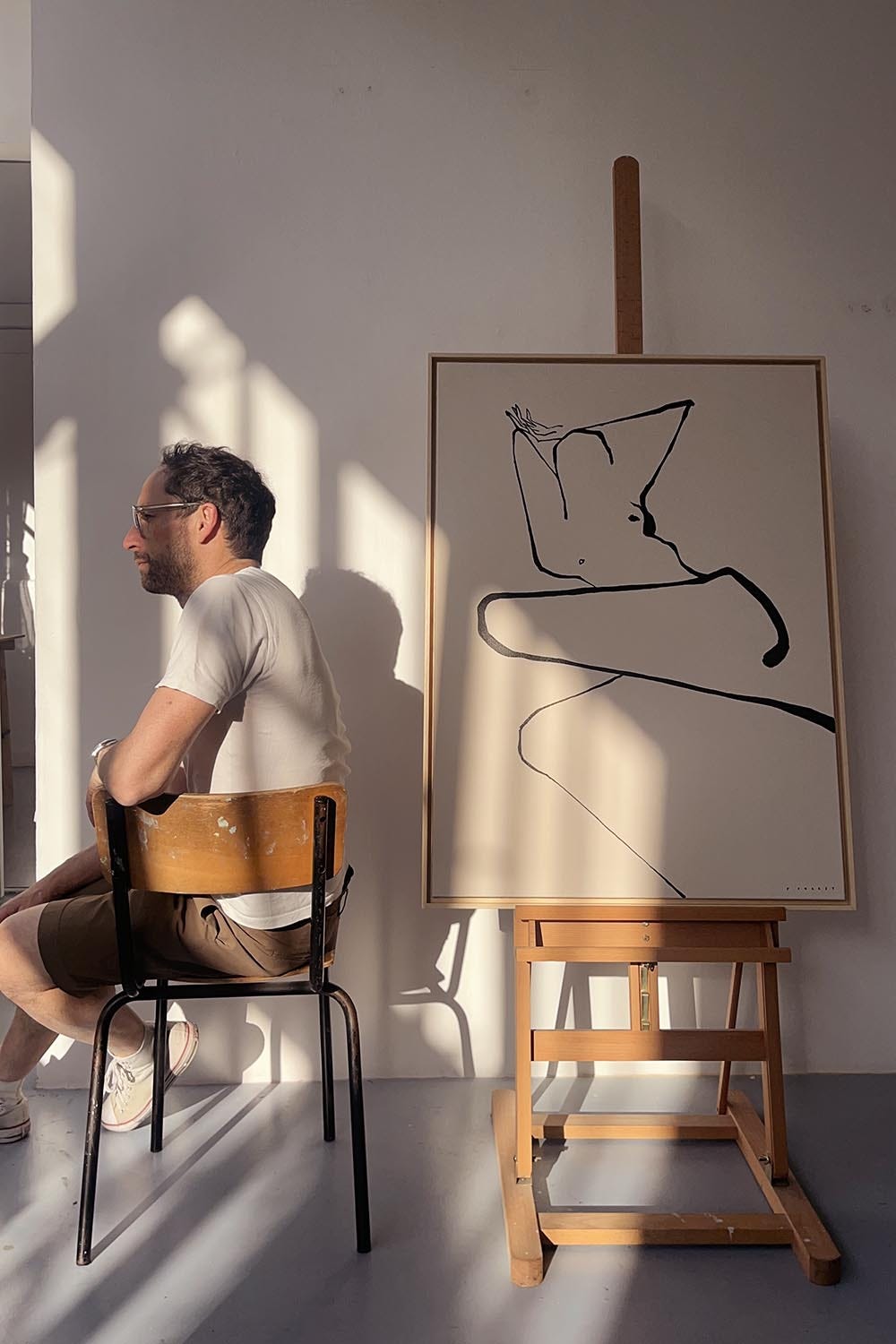
This past year has been intense. Several projects followed one after another, but it was my solo exhibition, Transitions, that deeply marked me—even if I didn’t fully realize it at the time. I prepared it for months. The idea wasn’t to create a static retrospective, but to show my ongoing series, my research, my explorations. I wanted the exhibition to remain in motion, to breathe with that energy, without being confined to a single direction. With my agent, Athina Perrin (Cura), we took the time to write and narrate the processes, the transitions from one series to another. Because that’s what being an artist means to me: always being in transition.
Finding Words Again
After the exhibition, I couldn’t draw as I had before. It was as if I had given everything. So I turned to words. First reading, then writing.
This summer, in the Southern Alps, I read Kusamakura (The Three-Cornered World) by Natsume Sōseki. It tells the story of a painter struggling with inspiration, who begins to write poems closer to his emotions—to eventually return to painting. I recognized myself in that journey.
Writing allowed me to reconnect with my own source.
Between Canvases and Papers
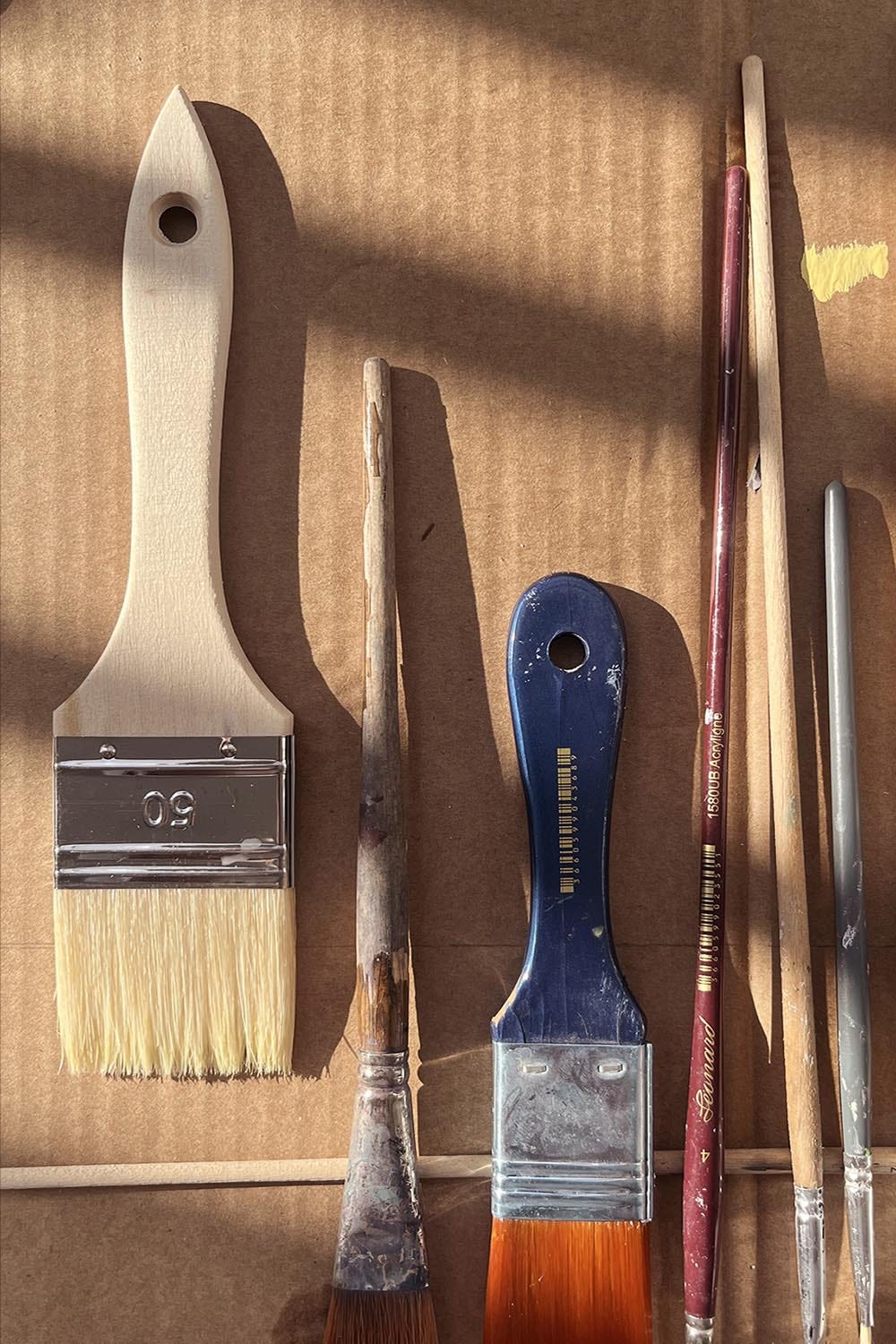
I’ve spoken about my journey and experiences before, even confided in the press or on Léonie Ragot’s podcast. But this time, it was about telling my story alone, directly. It was a constant back-and-forth: between canvases and papers, brushes and pens, painting and writing. Physically, mentally, emotionally: I am always in motion.
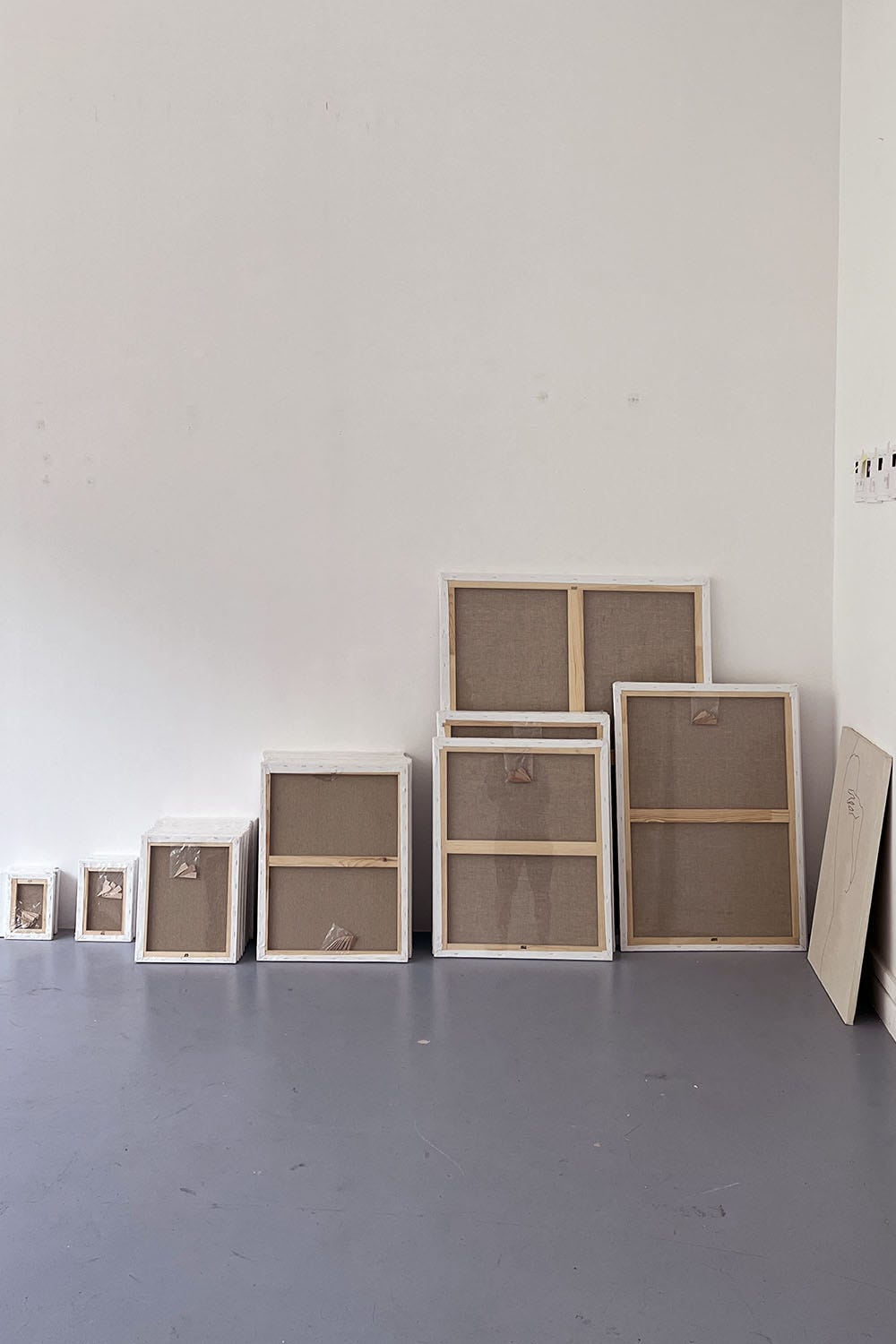
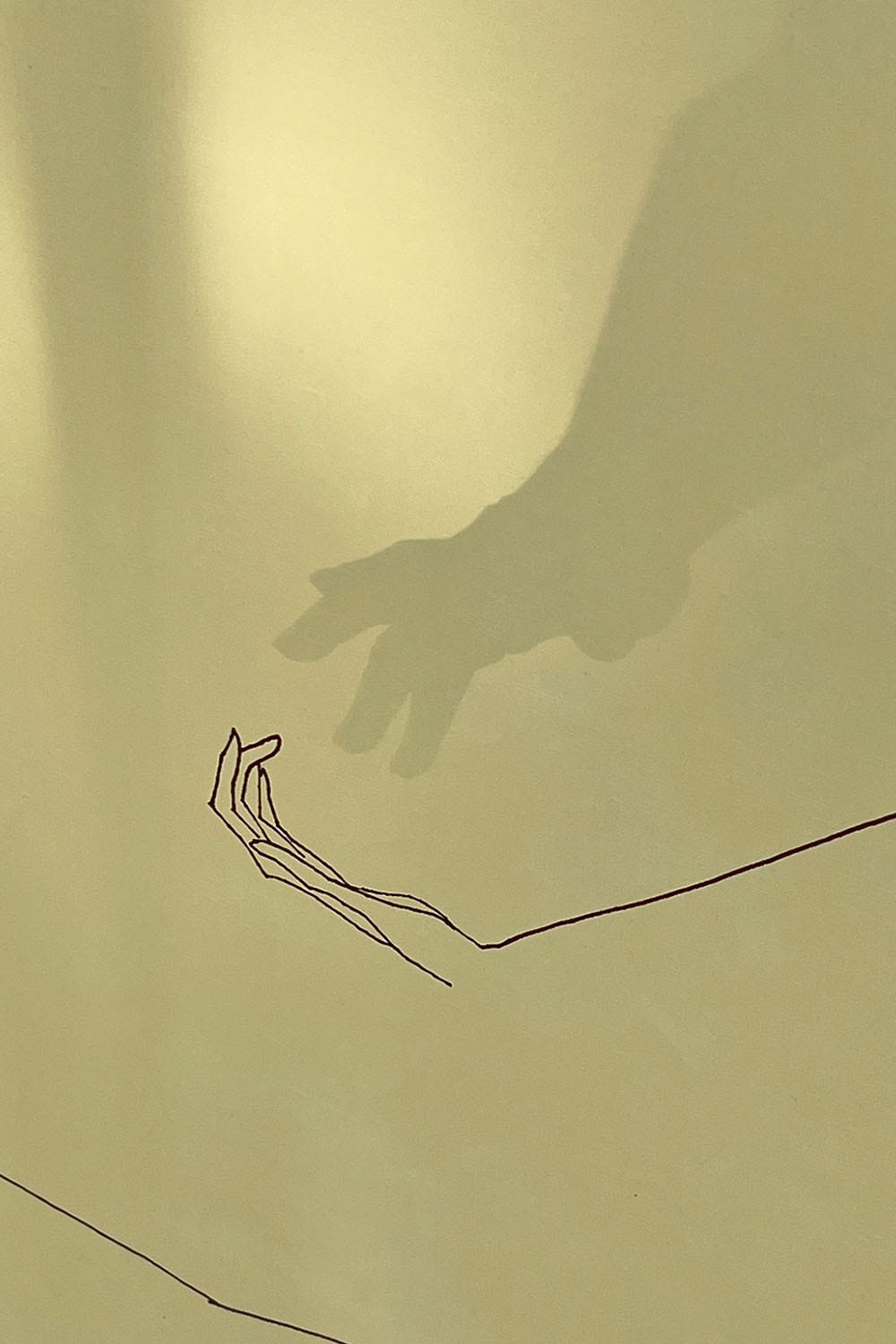
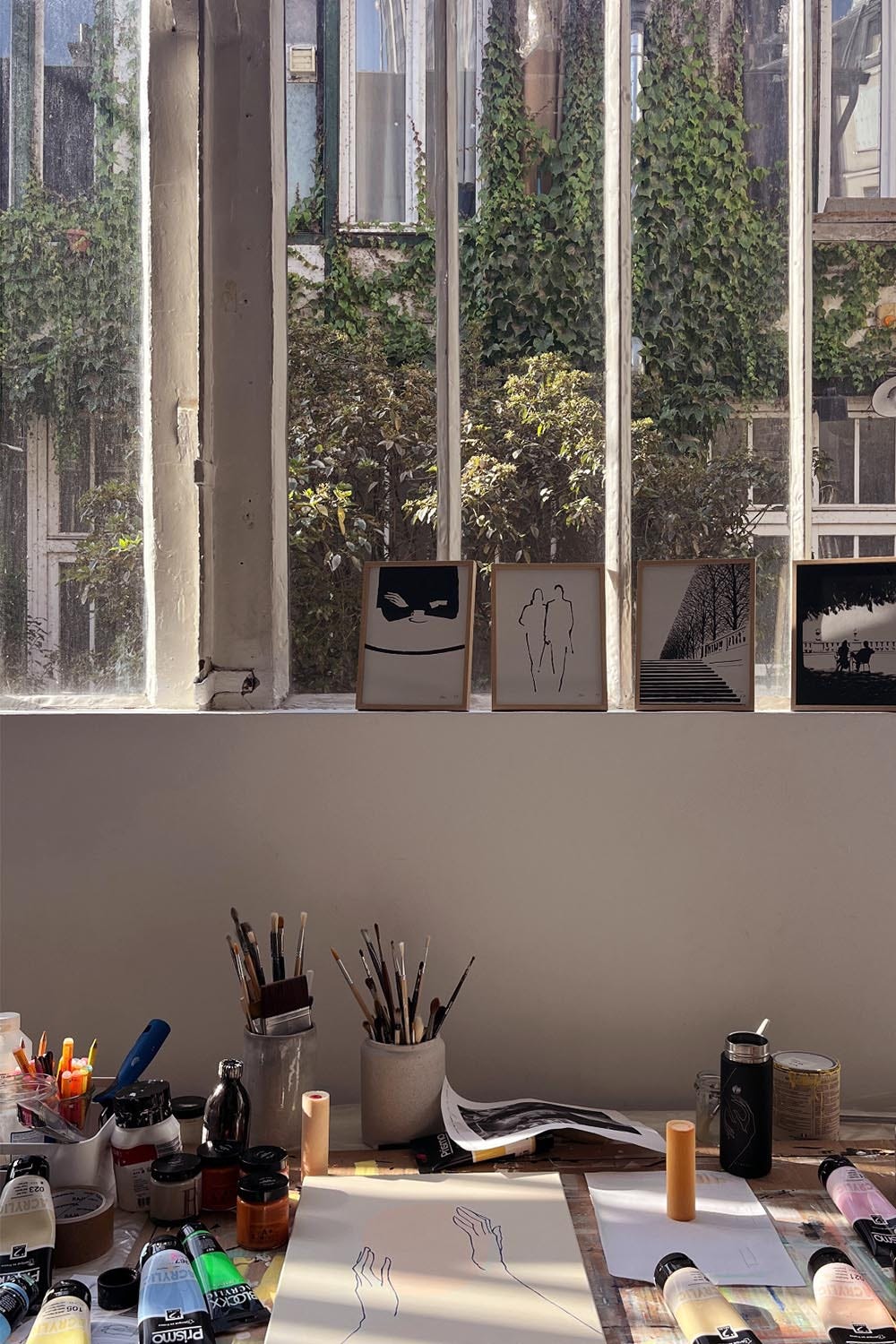
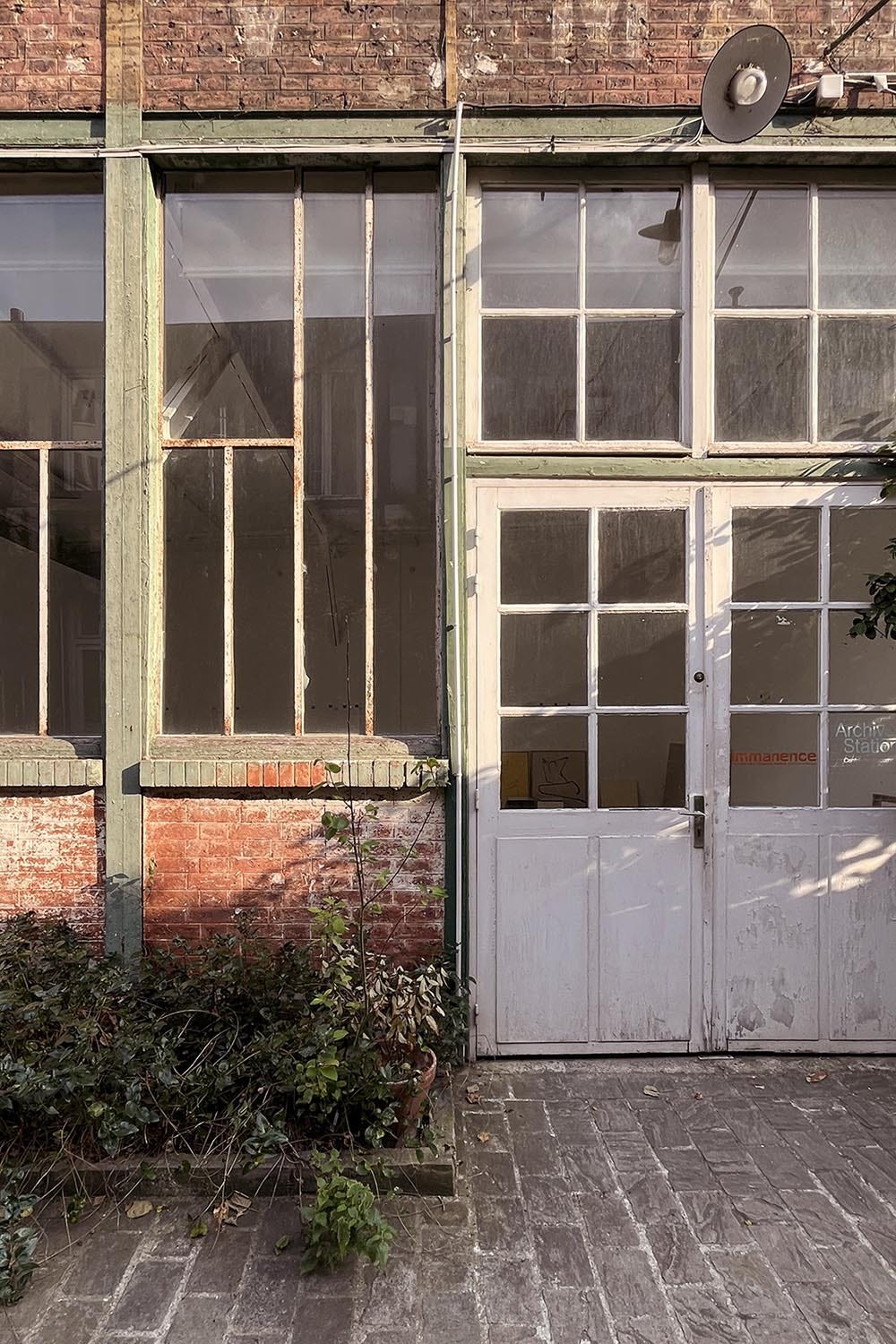
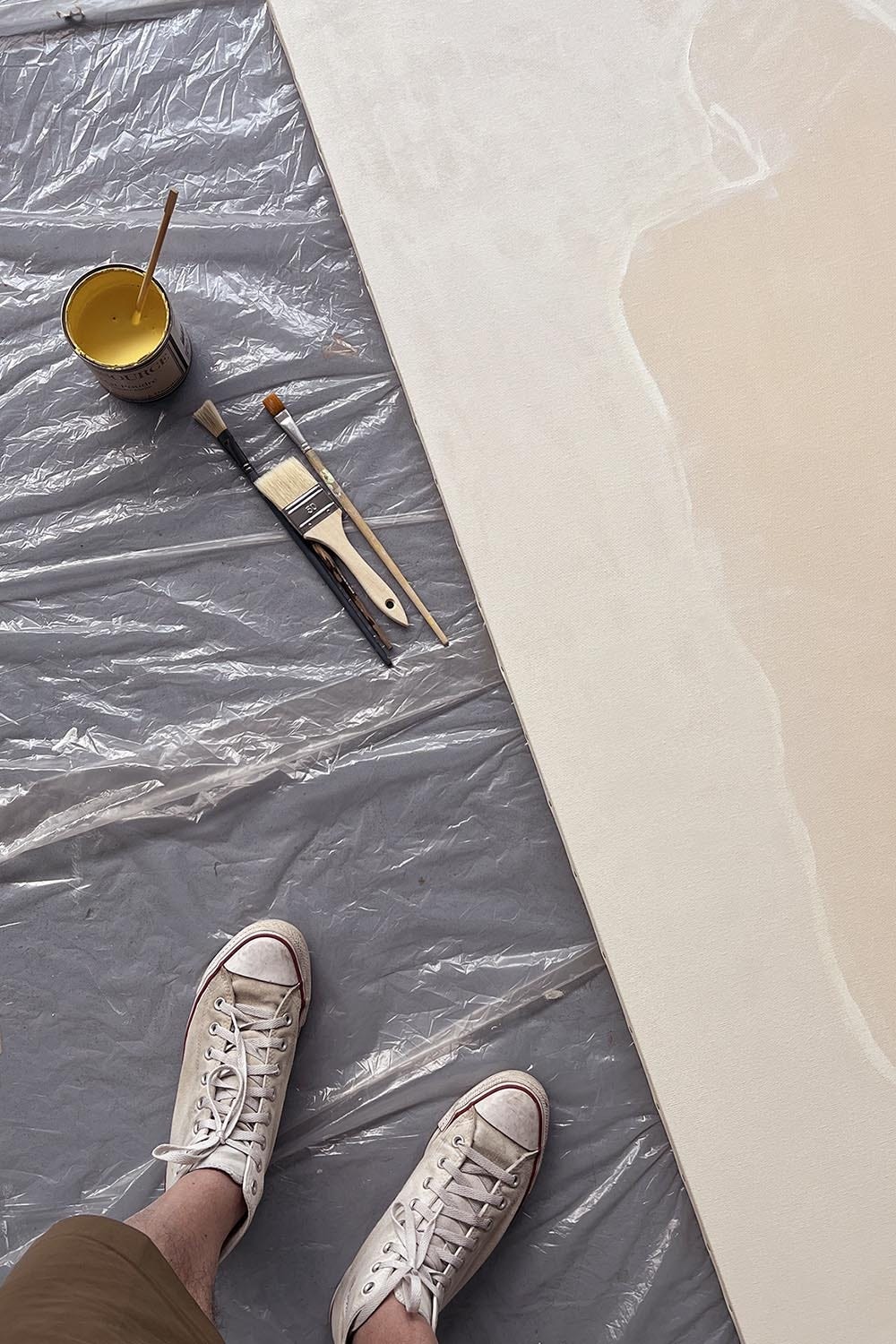
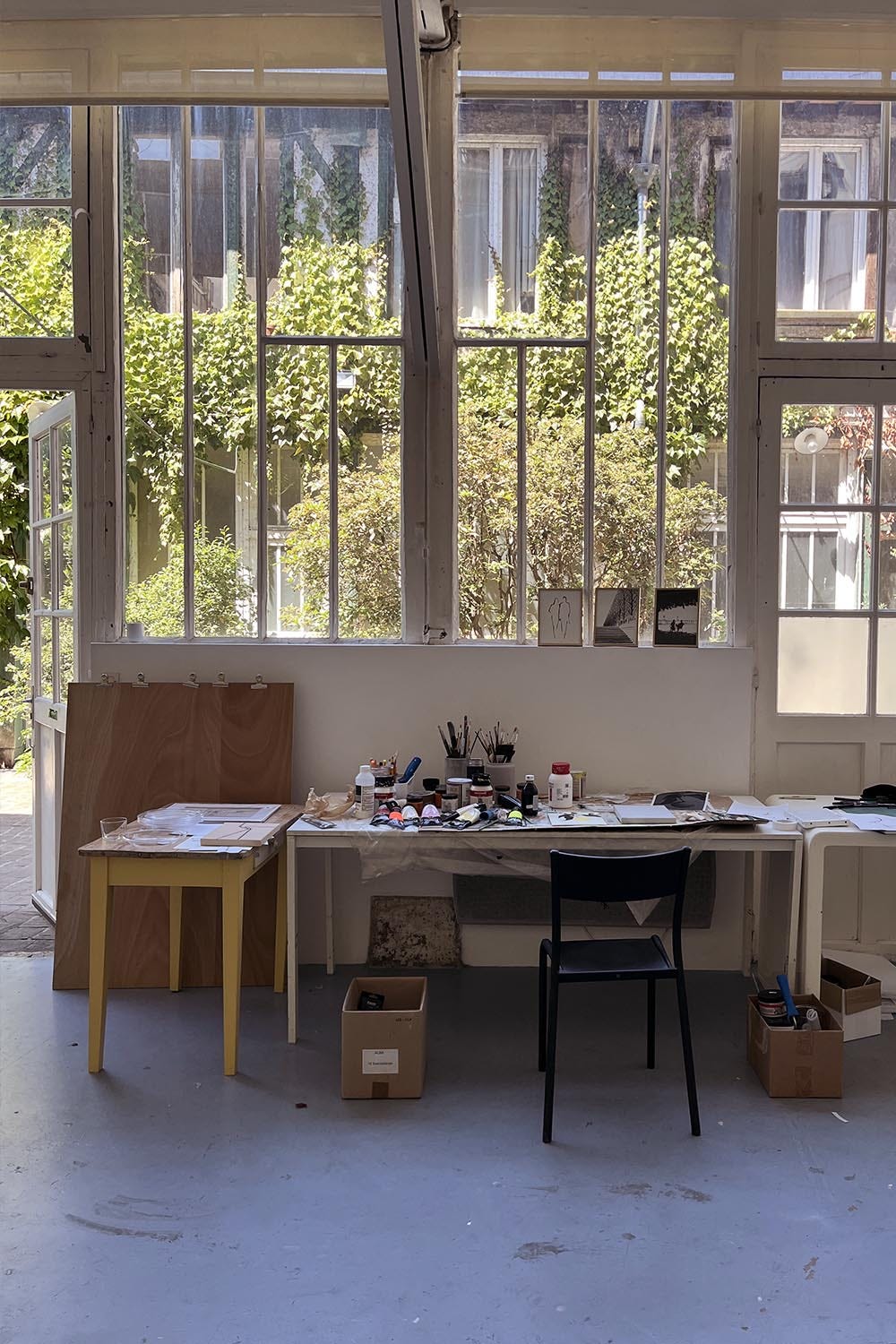
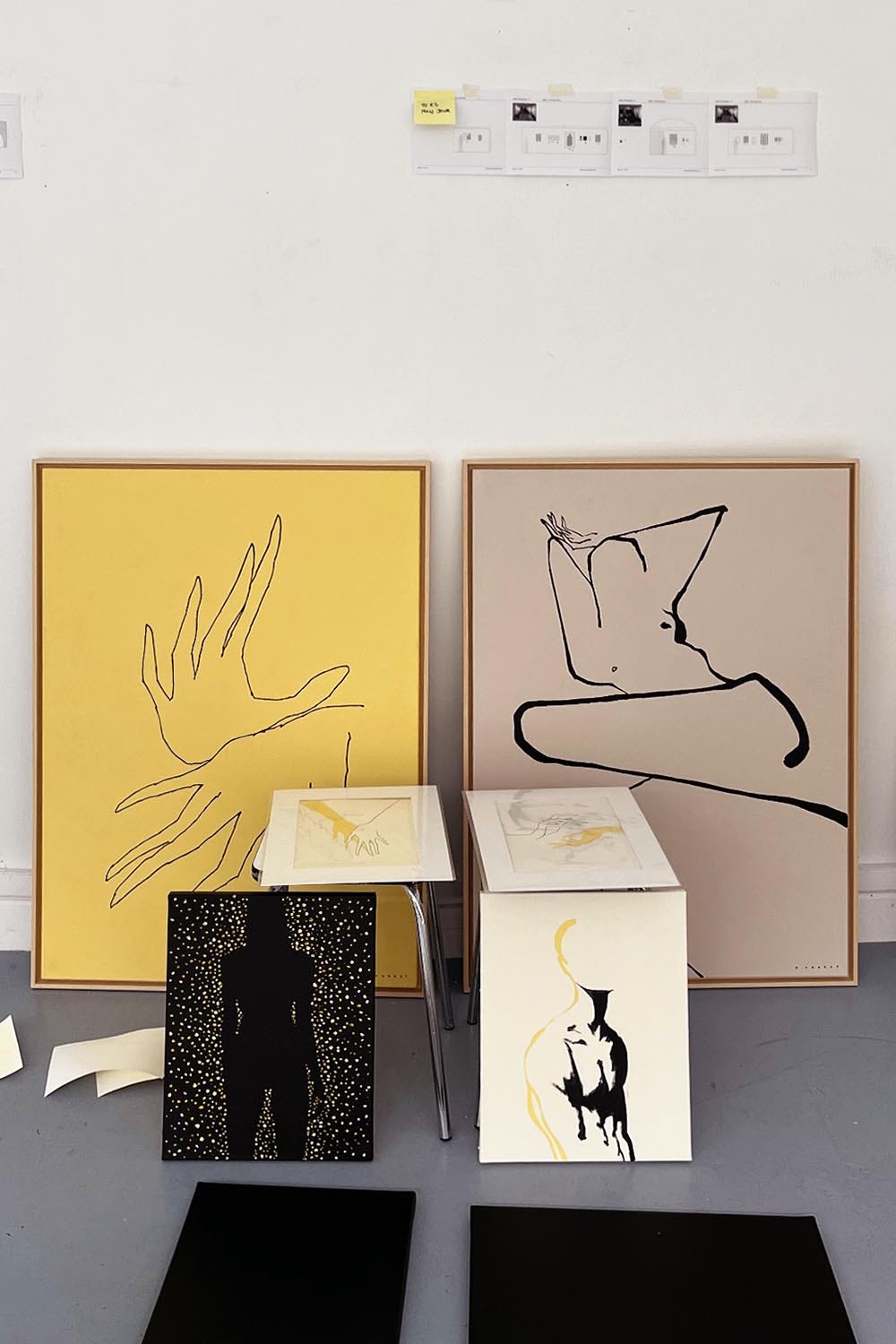
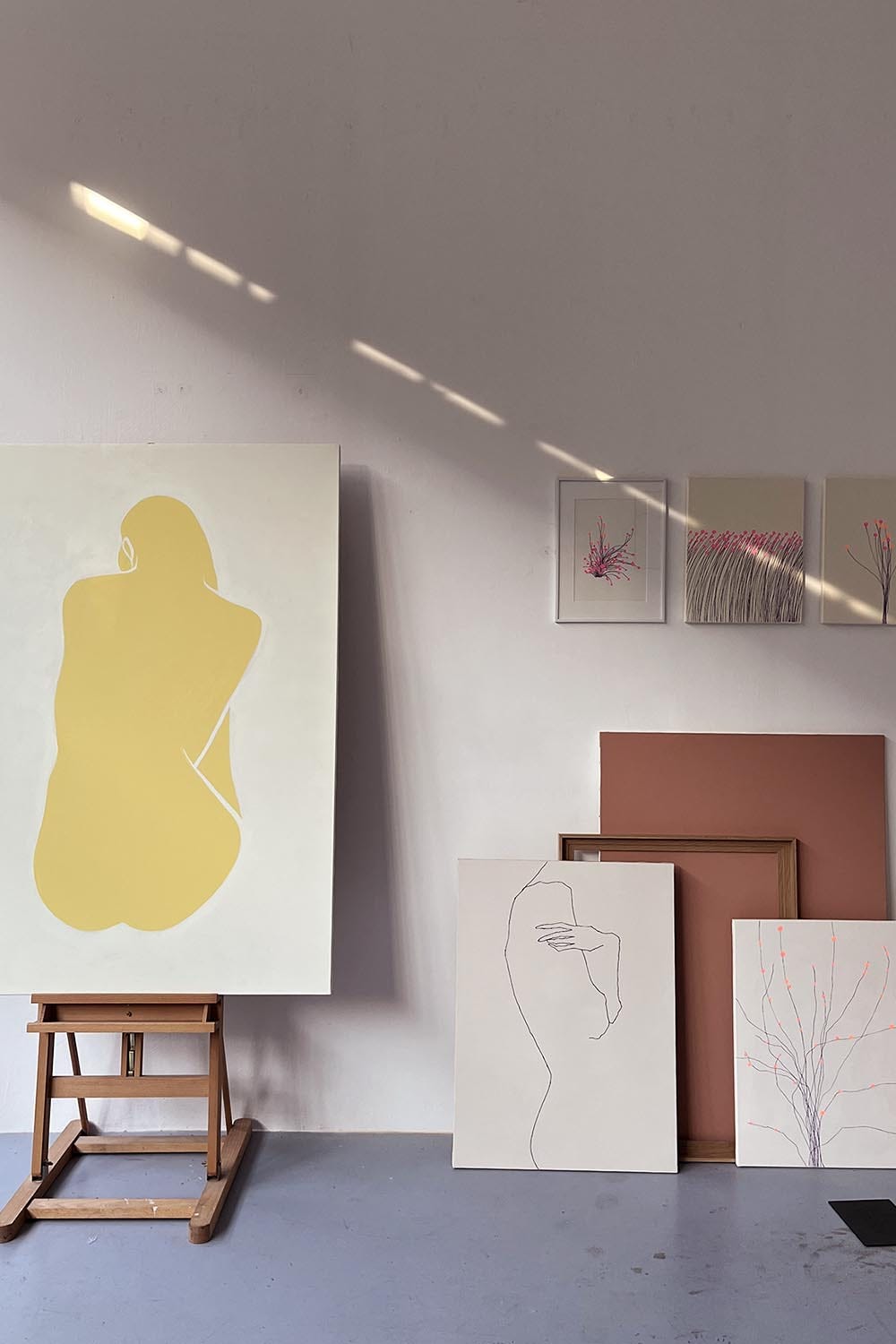
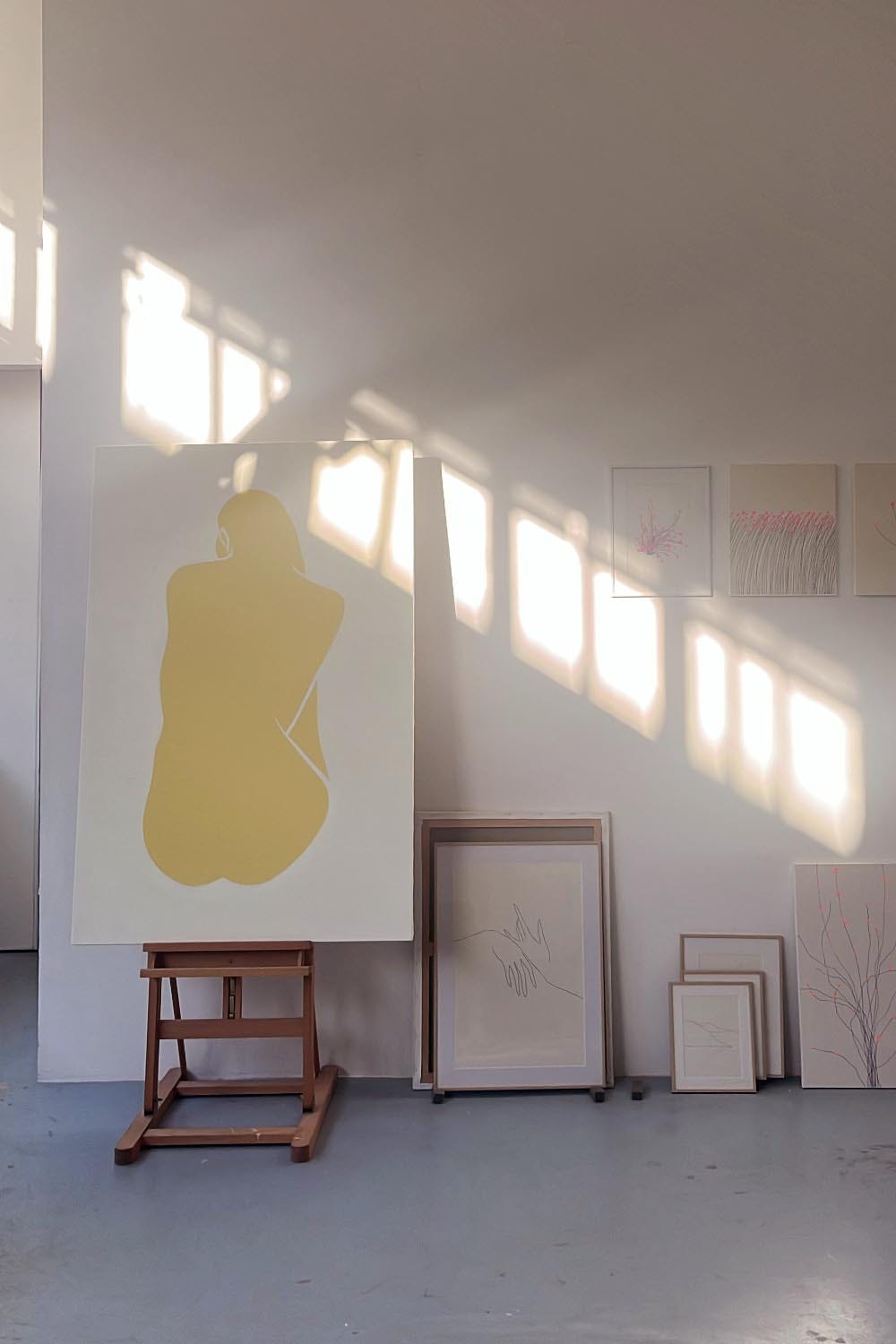
I spent an entire month in a rented studio for the occasion, right next to the one I share with the ceramicist Clémentine Giaconia. A vast space bathed in June light. From dawn to dusk, from 7 AM to 10 PM almost every day, I produced around a hundred pieces, hung and arranged everywhere on the walls. It was intense, exhausting, but deeply moving.
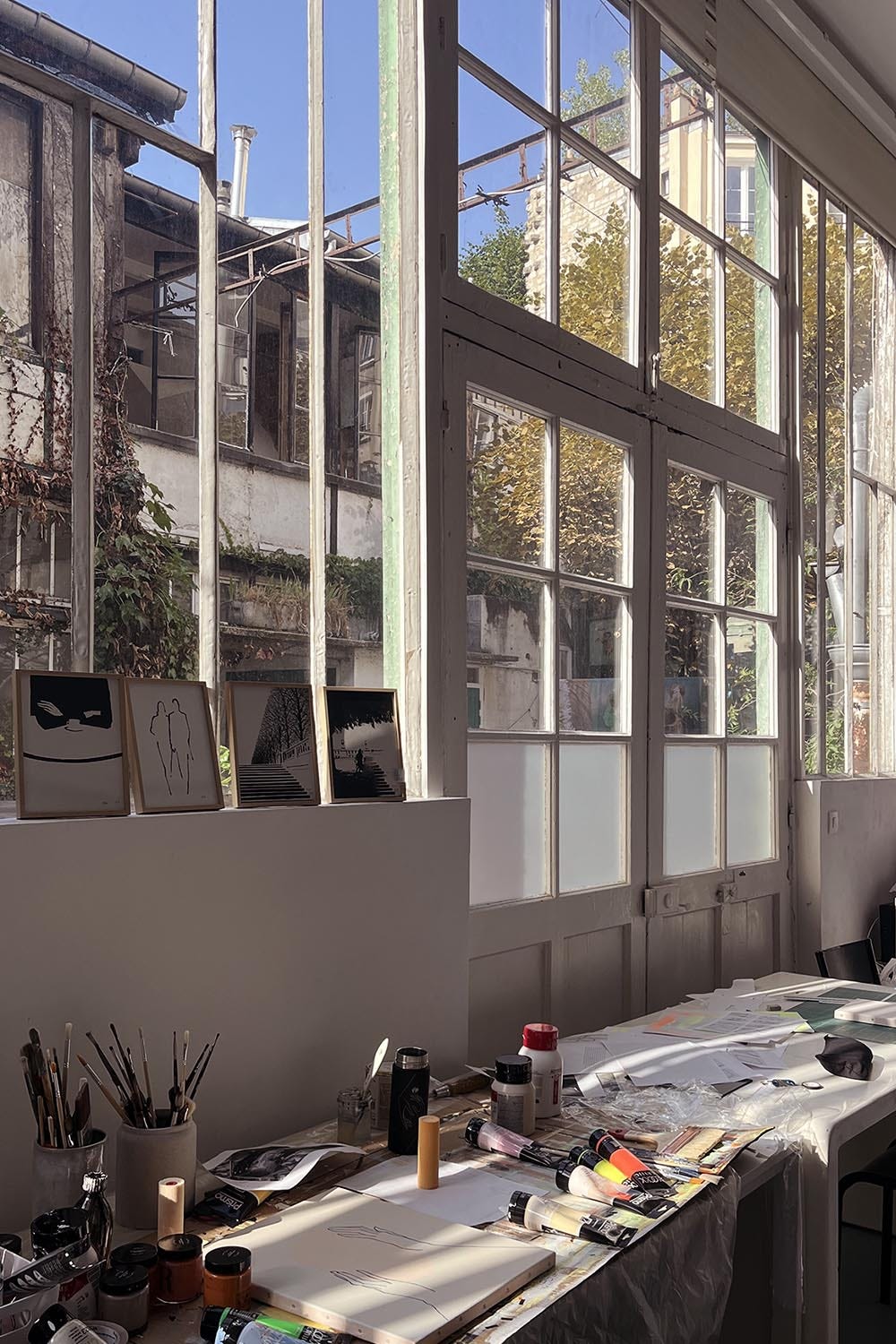
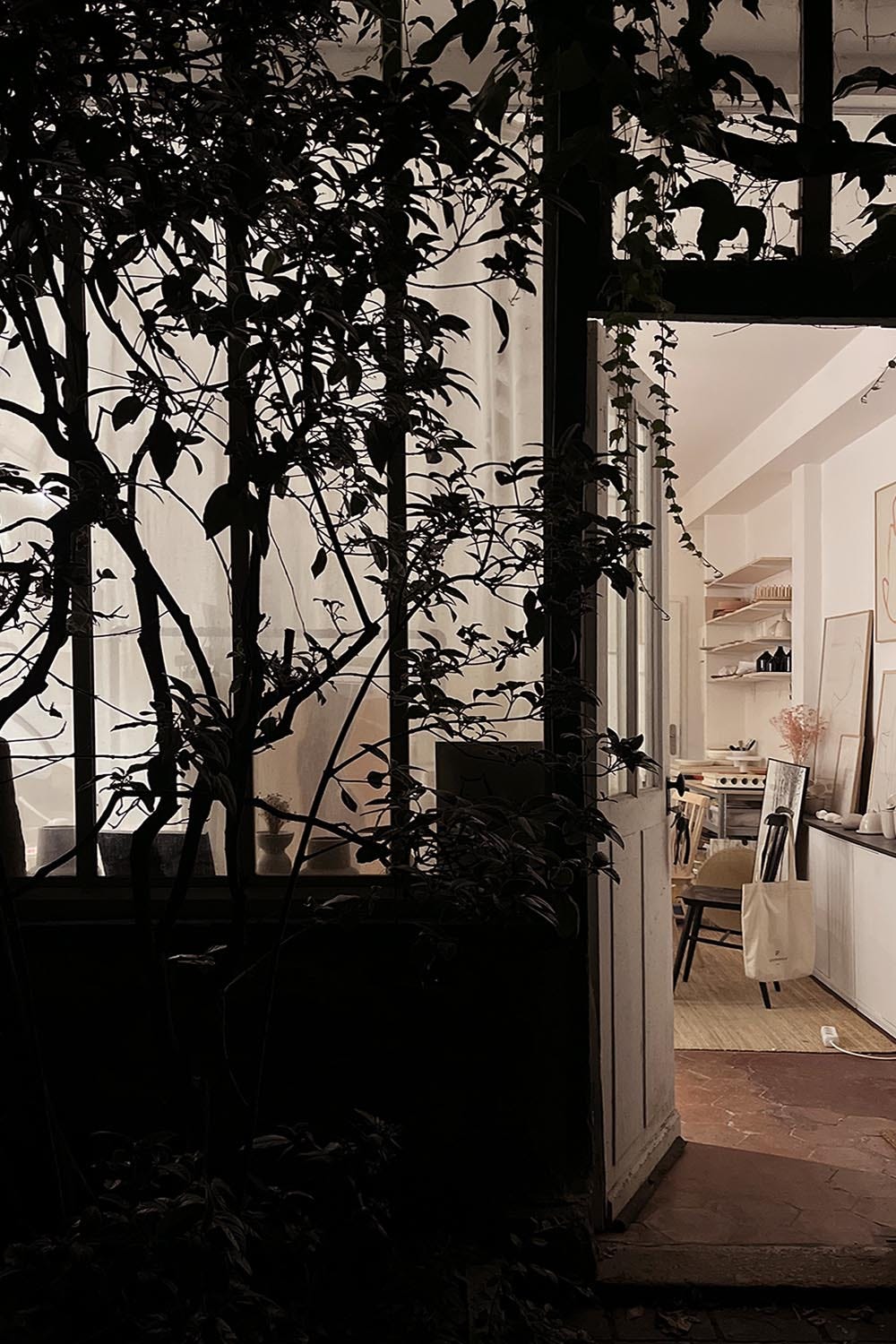
The space is usually used for exhibitions. It’s a large, open volume of about 45 m², with nothing to disrupt the flow. Originally a printer’s workshop, the polished concrete floor remains unchanged. But it’s the high ceiling and the wall of studio windows that make it magical. I couldn’t have dreamed of a better place to work.
Between Inspiration and Process
Before these four weeks of producing drawings and paintings, I shared with Athina Perrin my desire to develop different series that had emerged during a residency at La Chapelle in Cotignac. That summer of 2023, I had no set direction; I simply wanted to wake up each morning, paint, and draw until the heat became unbearable, then resume in the late afternoon until Léo, the cat of the owners Kim and Garen, would signal it was time to sleep. I wouldn’t even look at my works-in-progress until the next morning, in the rising light.
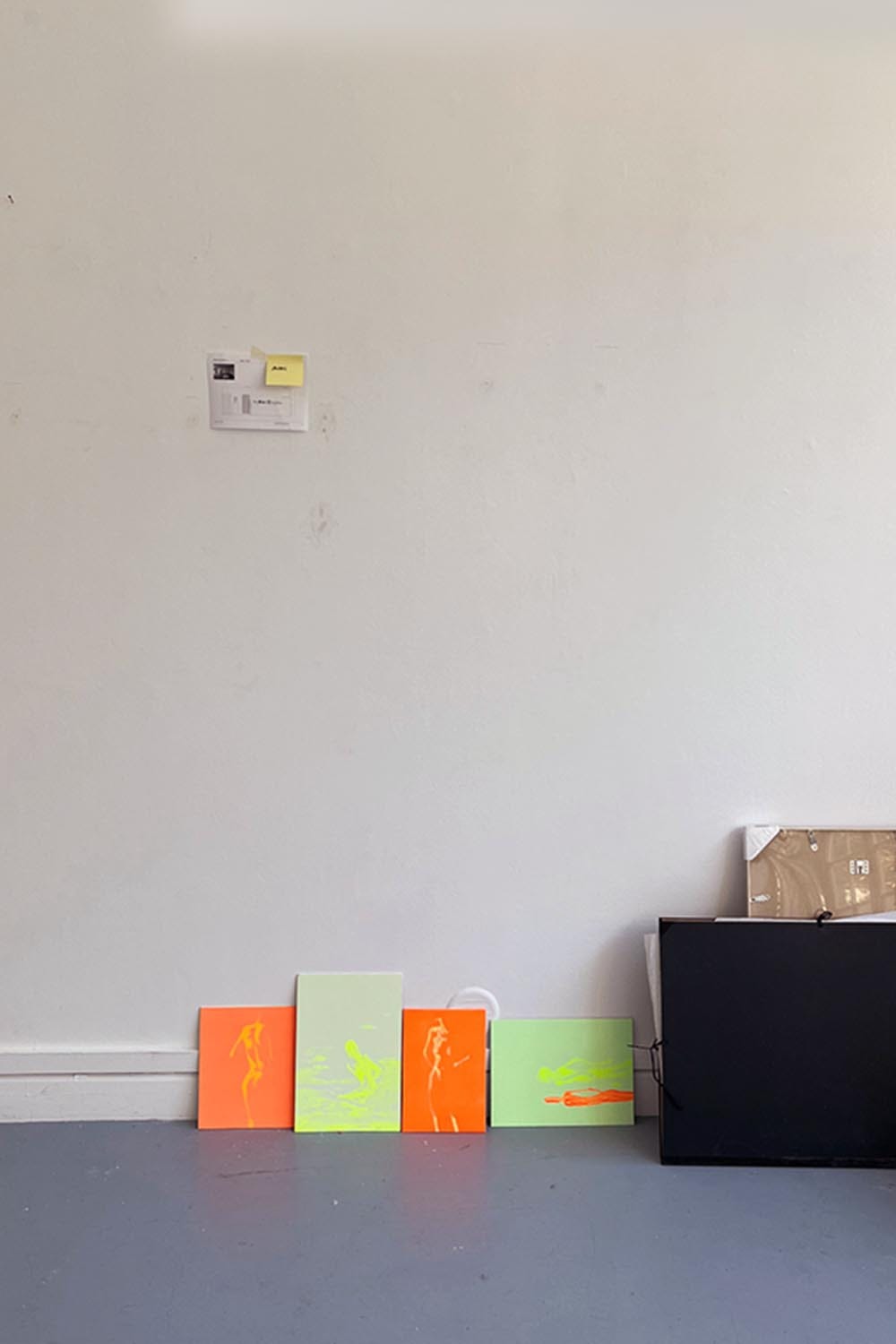
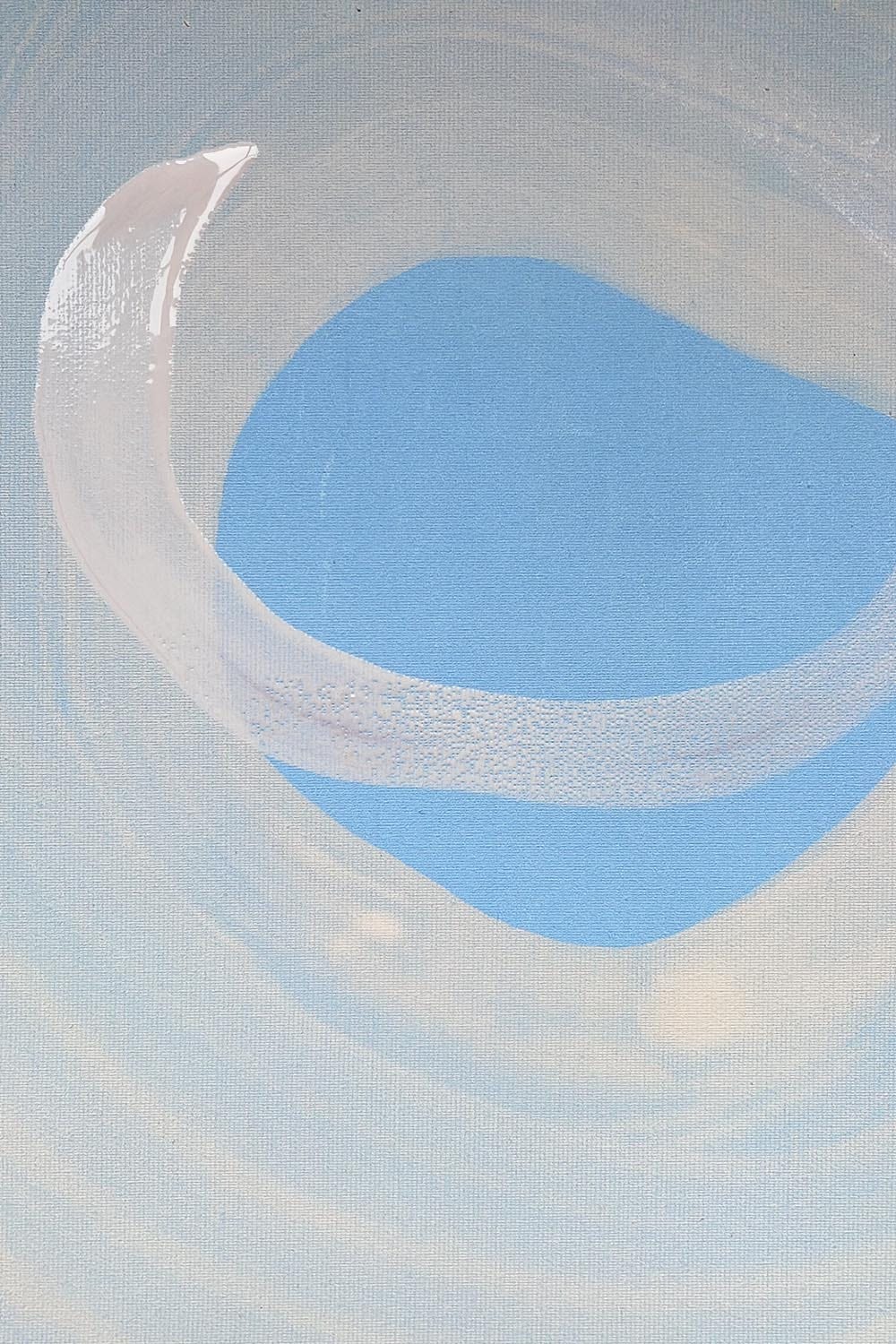
That’s where series appeared—or rather, organized themselves. Some had been with me for a long time but didn’t feel mature, or could be developed further: Ondes (Waves), which embraces the theme of water and saturated memories; Variables, which gives volume to my lines and opens up sculptural possibilities; Fréquences (Frequencies), which questions the function of filling a canvas; Flow, which makes lines vibrate like concentrated auroras; Études (Studies), a playful repertoire of photographic representation through my hand, and the most well-known of my work; Échos (Echoes), which plays with abstract forms accompanied by lines to outline bodies; and Tu es mon Jour (You Are My Day), which I had set aside after an exhibition in Spain at 11 House in 2022. I’ll return to each of them later.
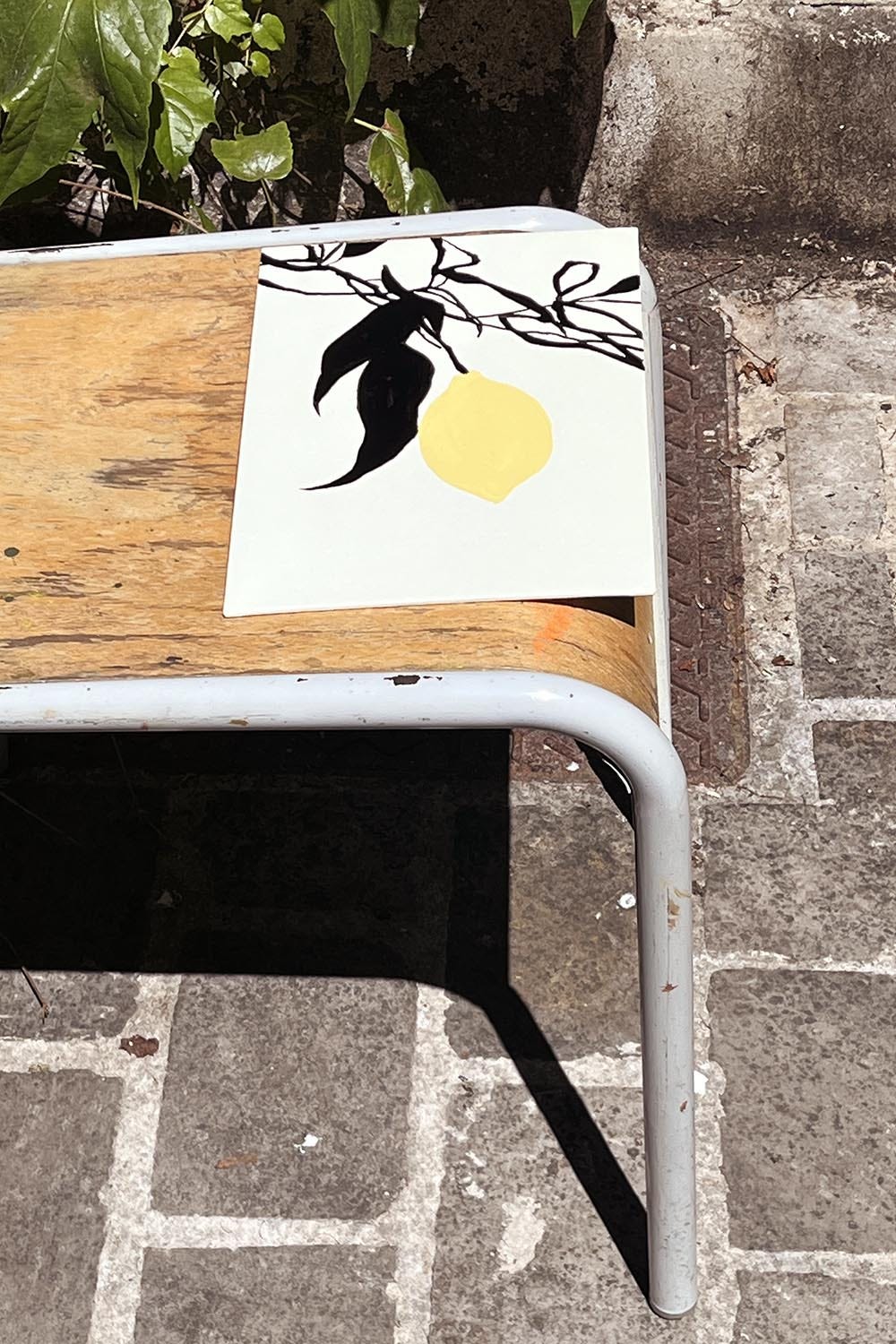
I took up these series again and decided to show them—and push them even further. Over four months, I filled entire notebooks with research, and with Athina, we selected a portion. Because there’s always a play between the preparatory sketch and the act of producing the final piece. That’s where inspiration must appear—or reappear.
It’s like a relationship with the project of the artwork or the piece to be painted or drawn. It’s often tempting to enlarge it, simply transfer it to another medium, move from paper to canvas, or change materials, but that won’t be enough—and it’s not the point. You have to revisit the idea and the inspiration behind it to create something new.
Routine as Creative Ritual
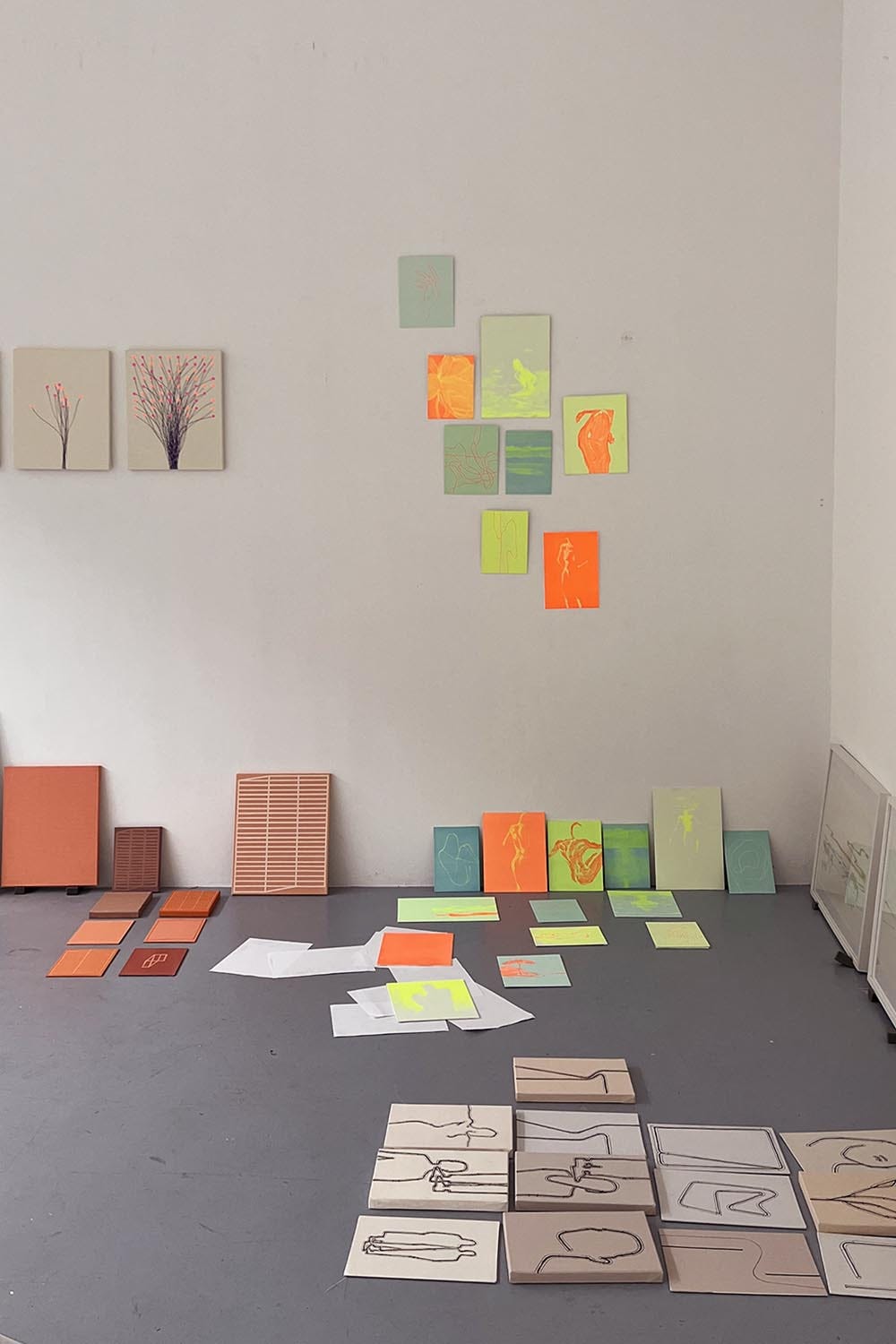
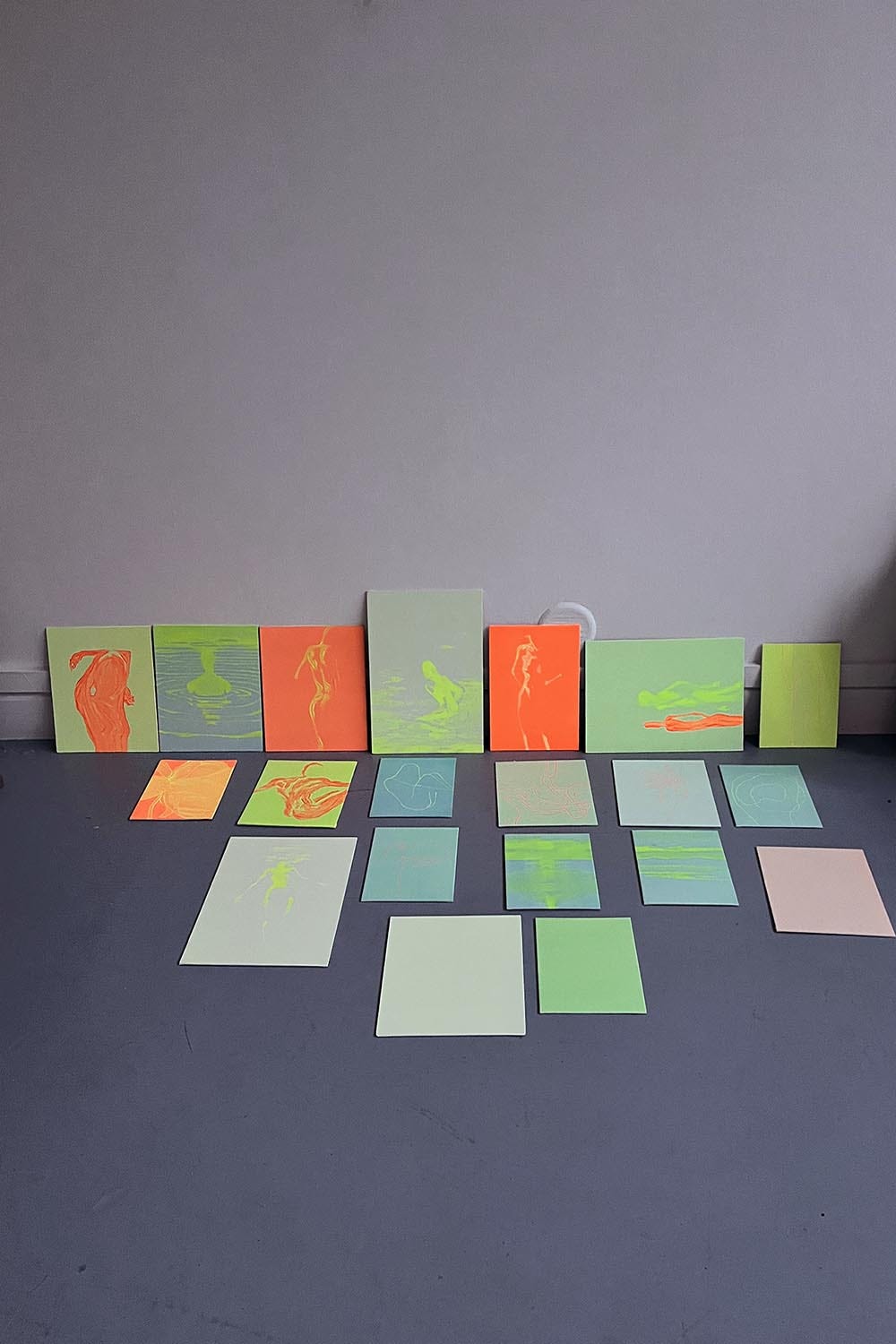
So, you must layer the initial energy of the sketch, the technique chosen for the final piece, and your mood of the moment. It’s a delicate balance between process and inspiration. The technique I use is to have a routine to set the rhythm of my day and my week. I don’t have a schedule, but I made a list of the pieces I want to create. I printed the sketches in small formats, and on the first day I had the keys to the studio, I hung them on the walls in an orderly fashion. Just below, I placed the blank canvases in their intended sizes. At a glance, it gave me an idea of what the exhibition might look like—even though I still didn’t know. But the energy was there. All that was left was to begin!
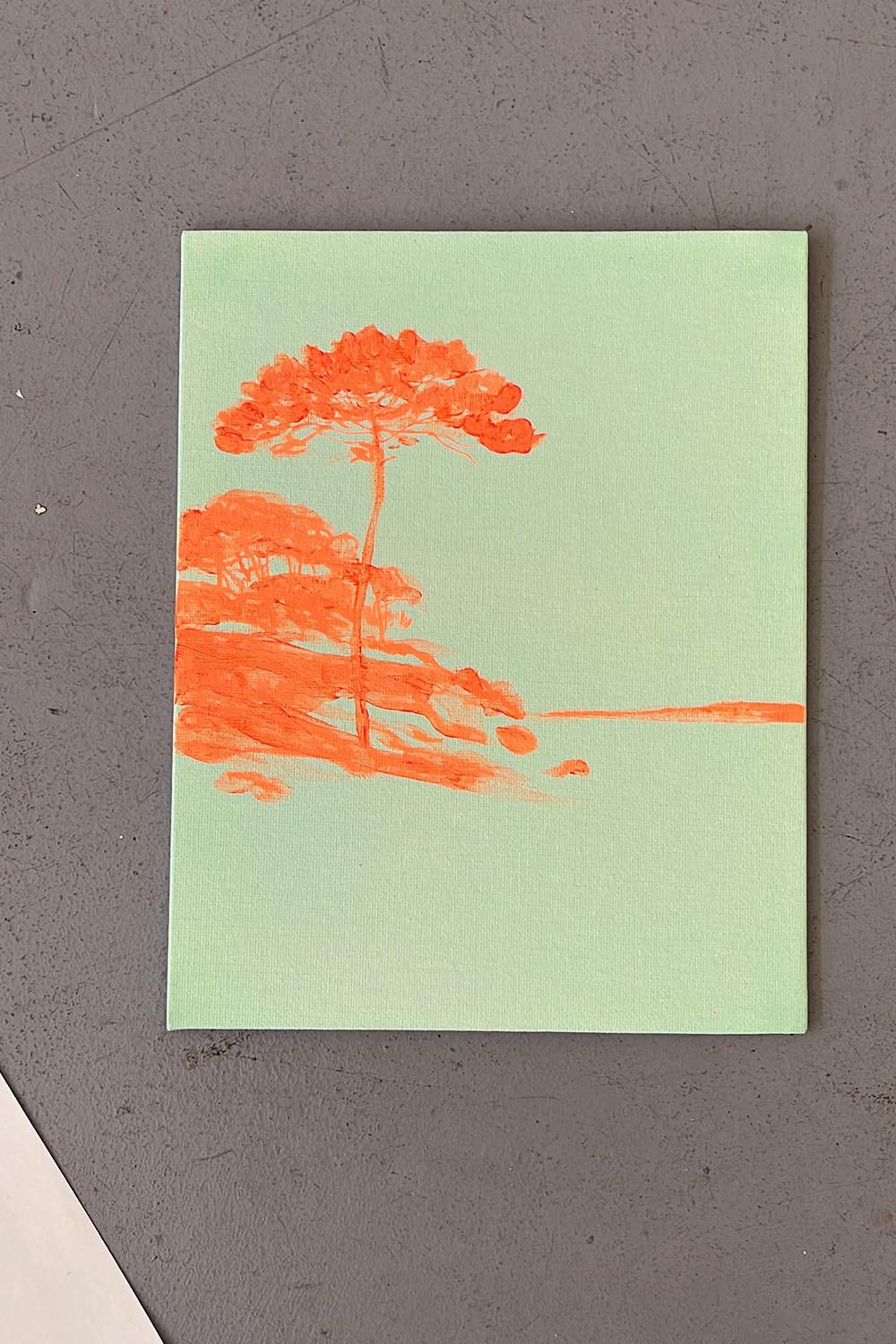
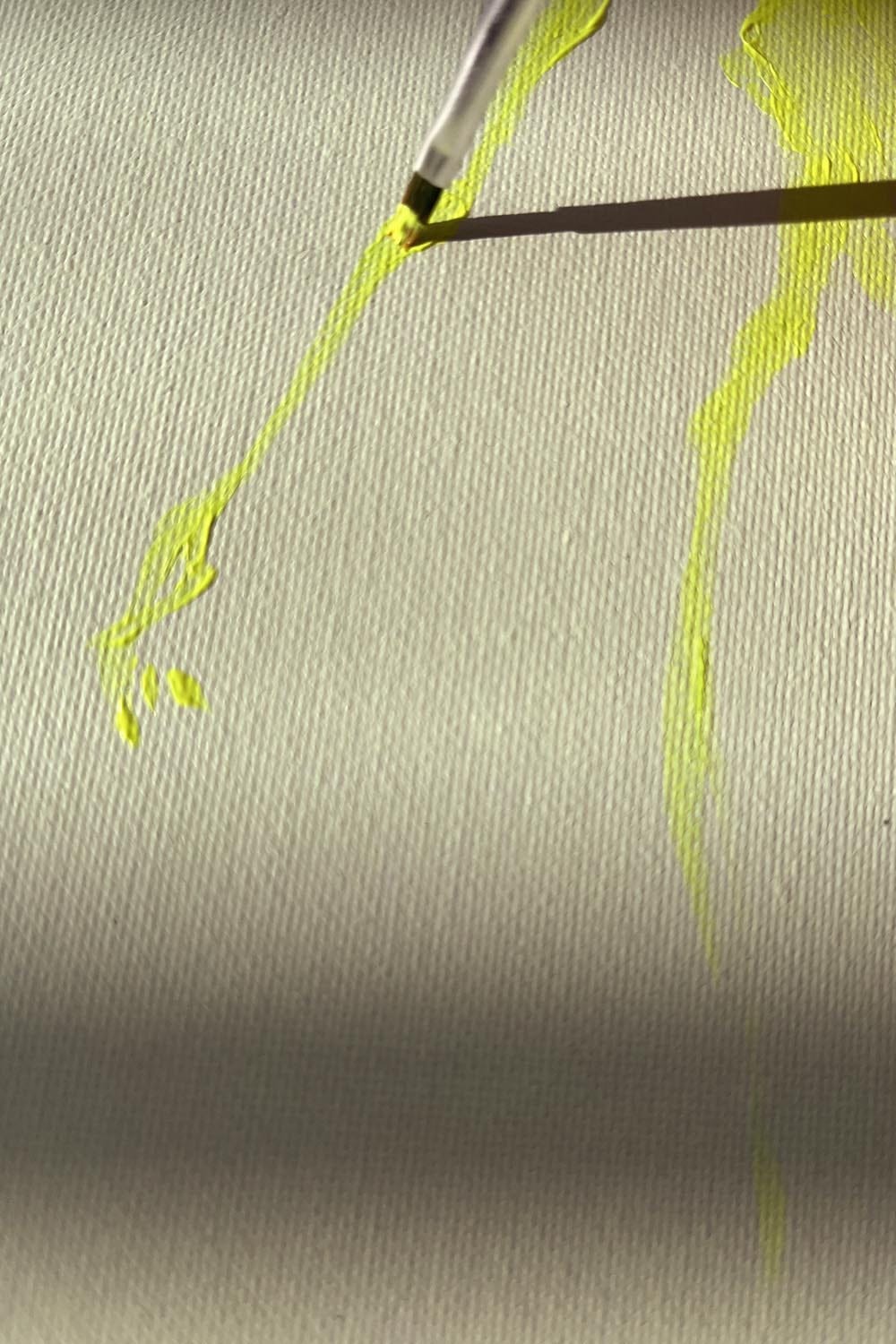
It was also at that moment that intuition and inspiration did their work. Routine frees intuition. I felt like a chess player surrounded by tables with other players for simultaneous games, except I didn’t have to follow a specific order—I could follow my instinct and desires, letting them guide my actions. Soon, I started with the most obvious pieces. They would serve as foundations for the others, the ones I wasn’t yet completely sure about. When I say “not sure,” it could be the format, the technique, or the colors. The finished pieces would set the tone. From the outside, it might have looked like a living storyboard, where each frame, each table, came to life like a scene—one I could freely move and rearrange, organizing their stories and the overall narrative of the exhibition. This approach, which felt instinctive because I knew of no equivalent in exhibitions—at least for a living artist—was also because I wanted it to be like an open book, revealing correspondences between my desires and their multitude.
A Chameleon Before a Mirror
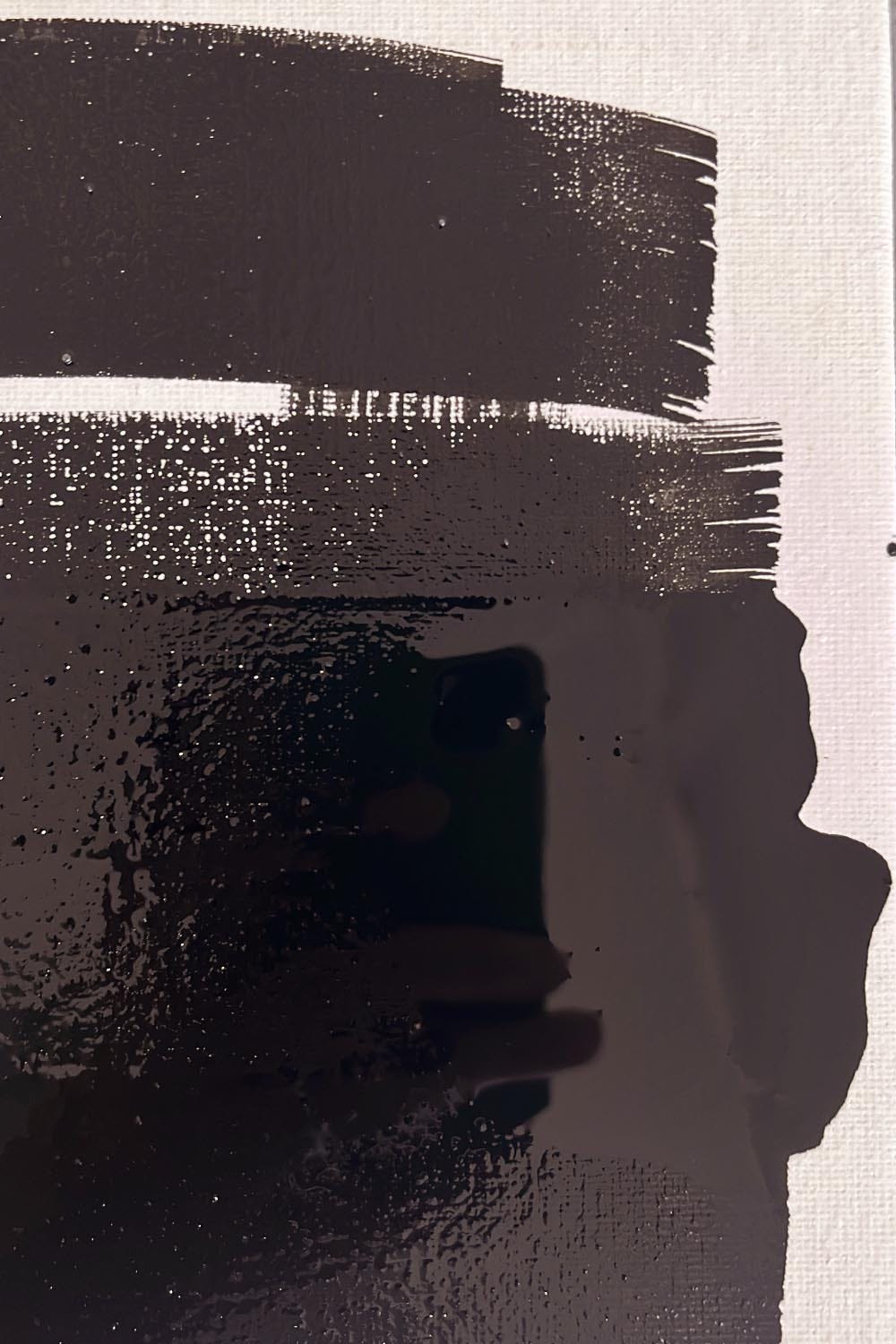
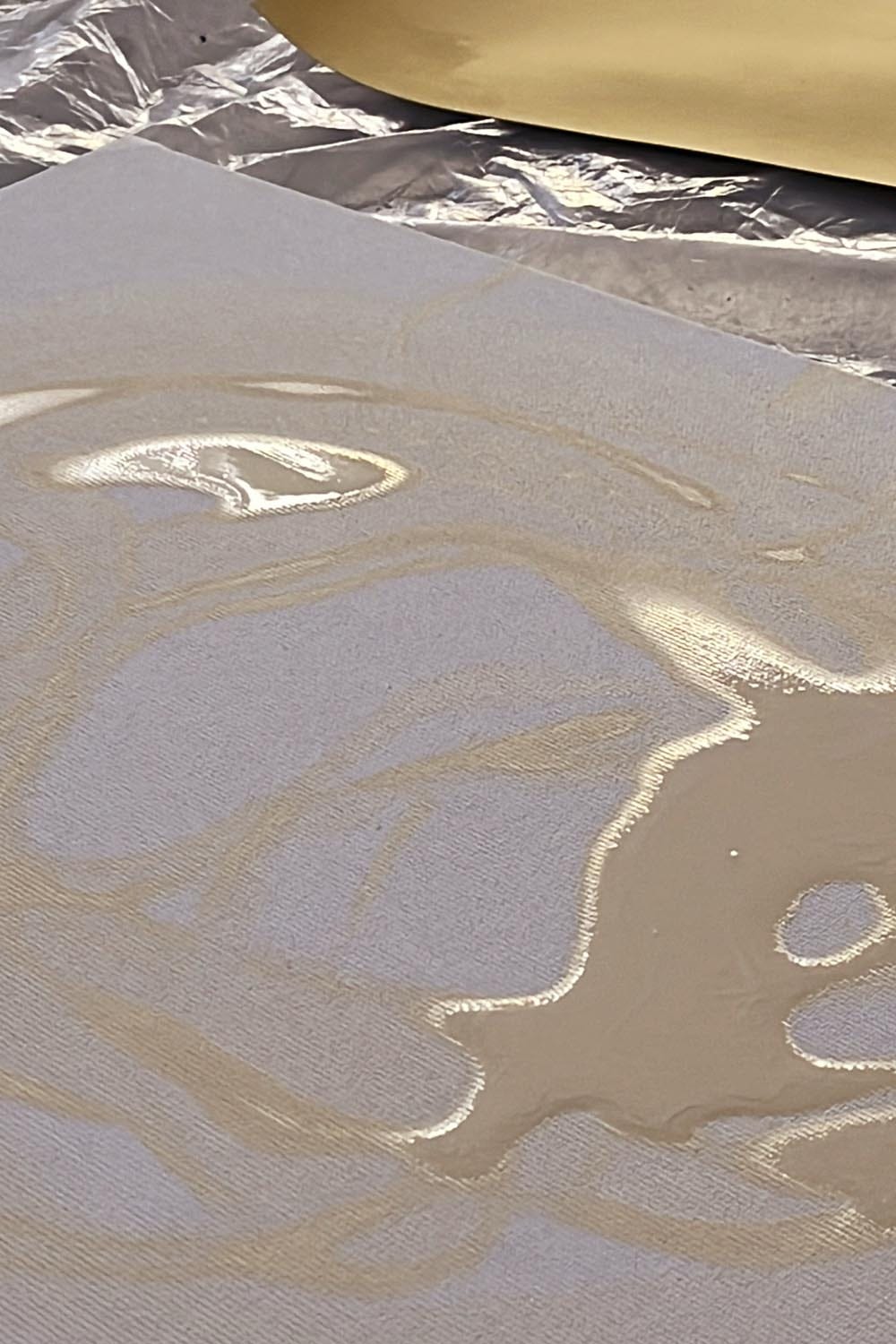
In the end, it’s all about the gesture, the primal action of standing before a canvas and applying a trace of ink or color. Either directly, spontaneously, or with a slower, step-by-step process. Working with color imposes a slower, sometimes laborious rhythm. The studio became a space of performance, a laboratory, an installation in the making. The workspace was a work of art in itself, a choreography in which I danced and changed partners. It was also an archive of my creation; a mirror without reflection. I felt like a chameleon before a mirror. I think I want to hold onto this state. This space of total, limitless research. It doesn’t matter if I can’t define it yet. Because I am that chameleon before a mirror. What would happen? What skin would appear? Would it disappear? Would it become a mirror, covered in chromed scales? Or would the mirror become a chameleon? I can’t answer these questions yet, but they have taken root in me.
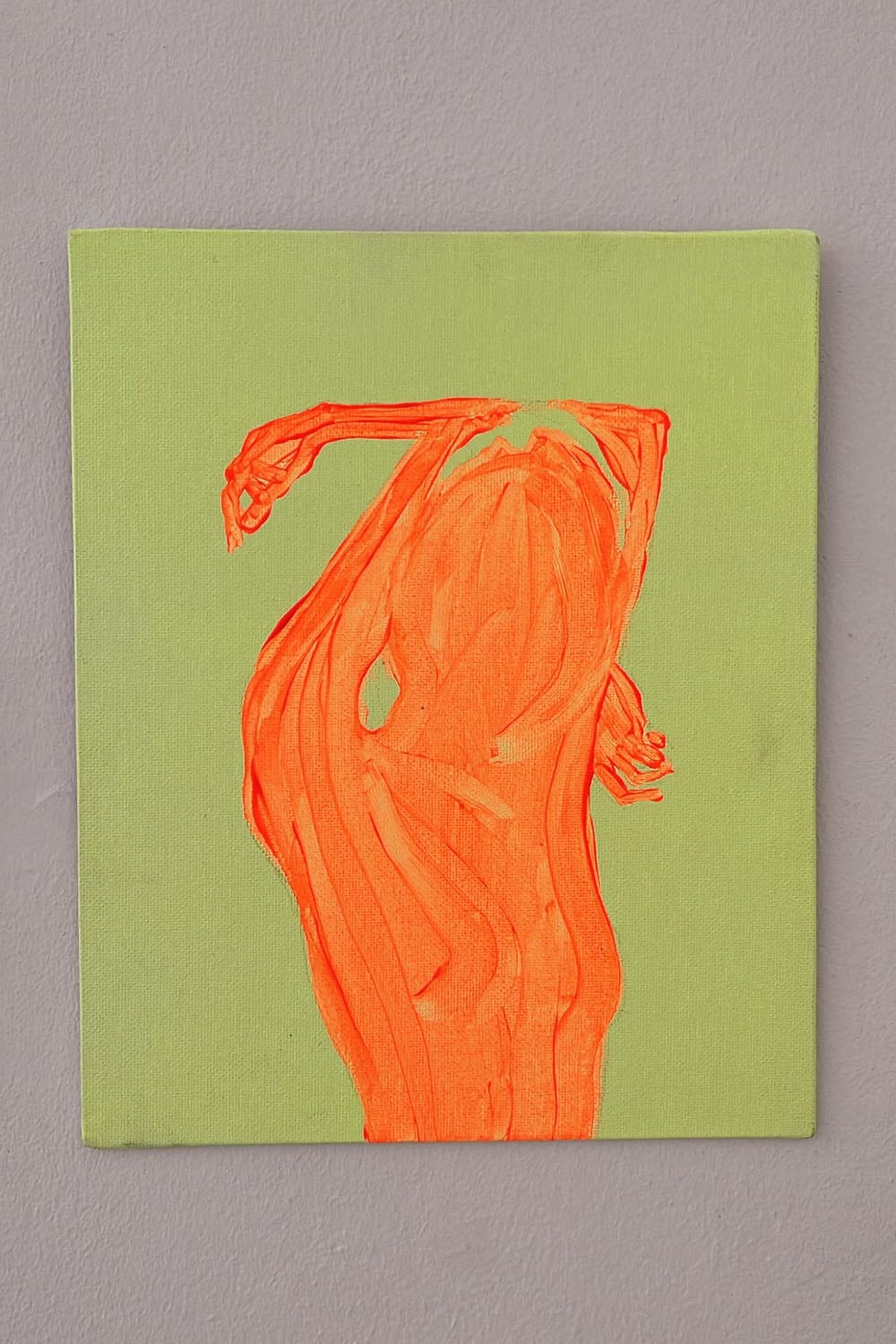
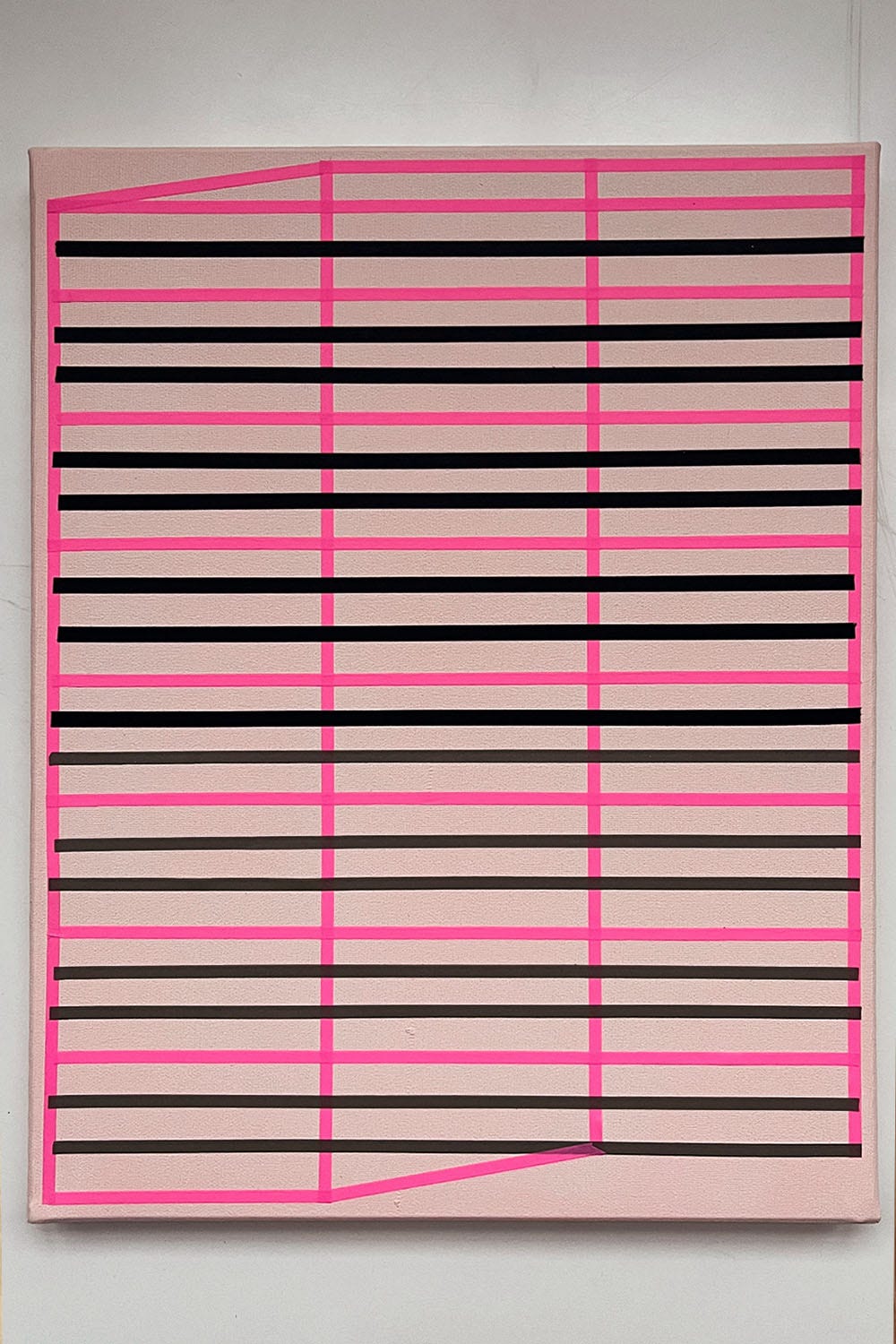
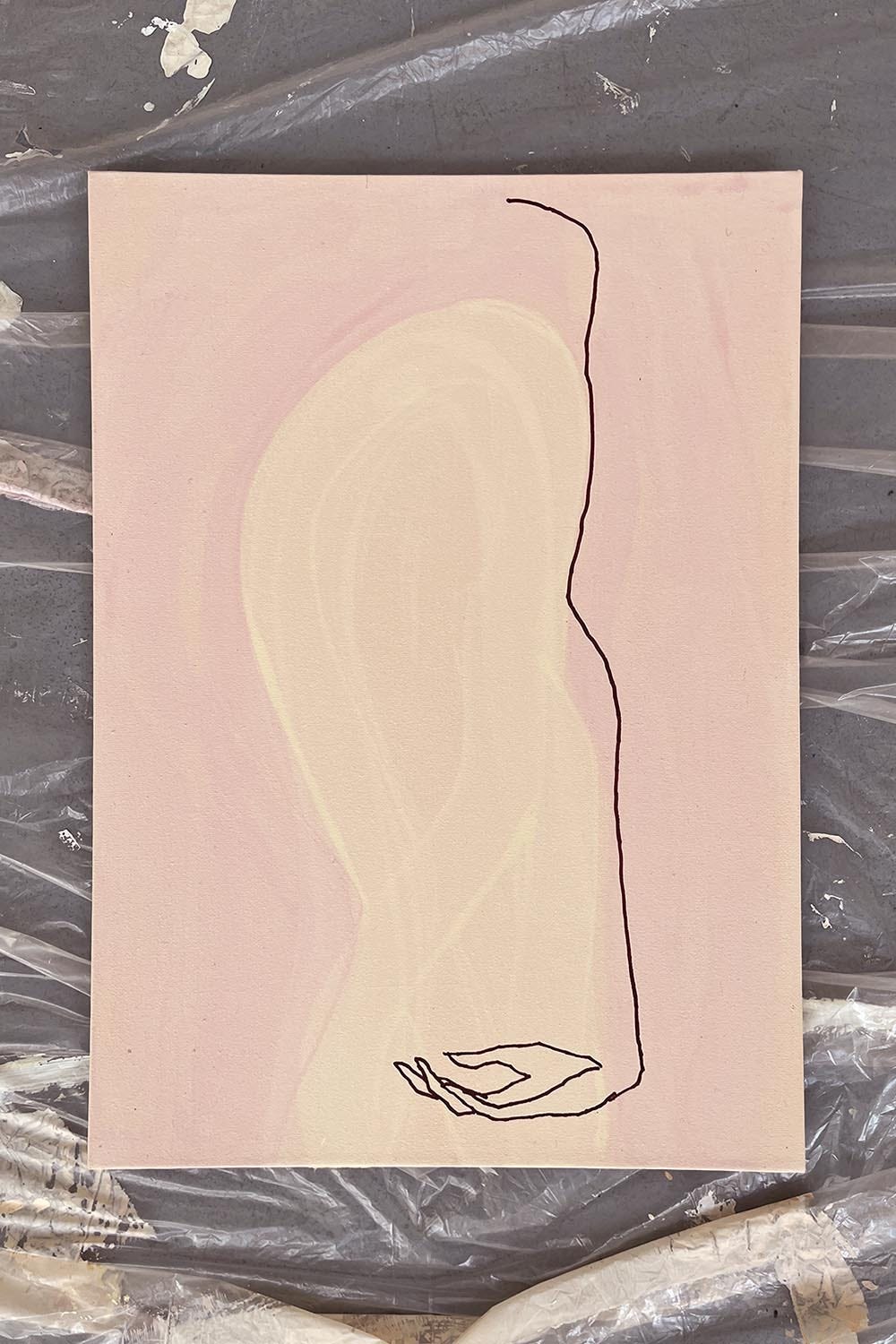
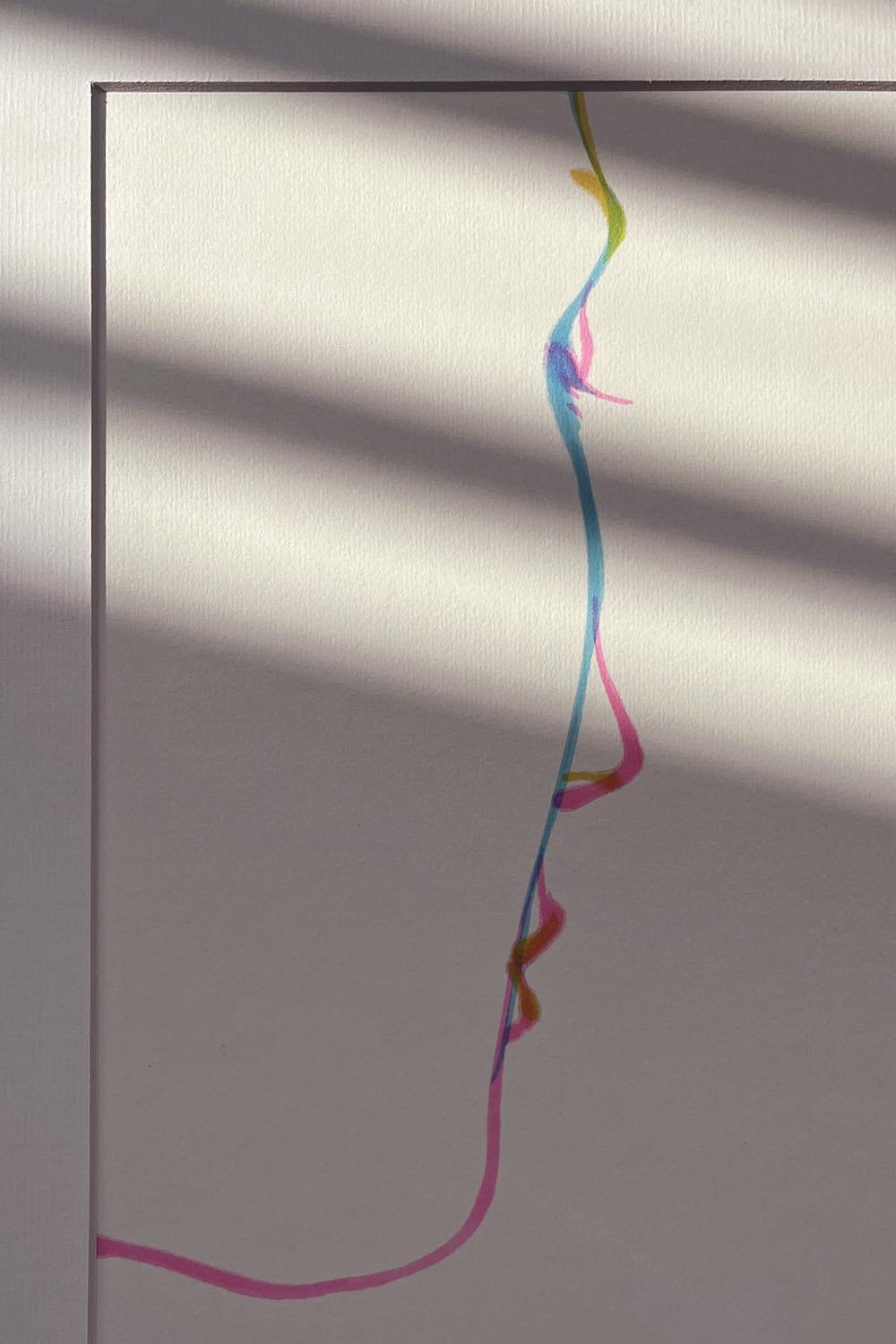
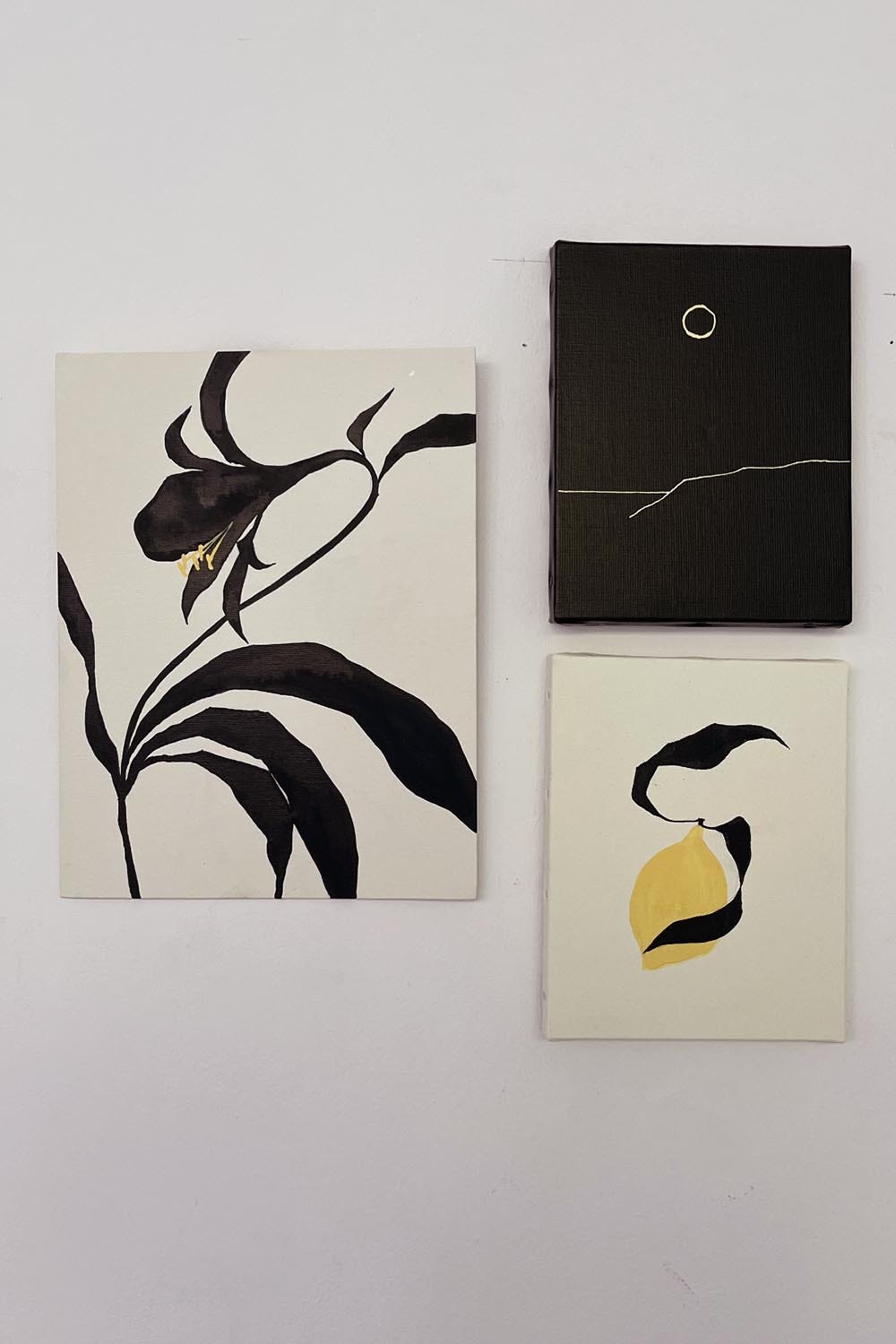
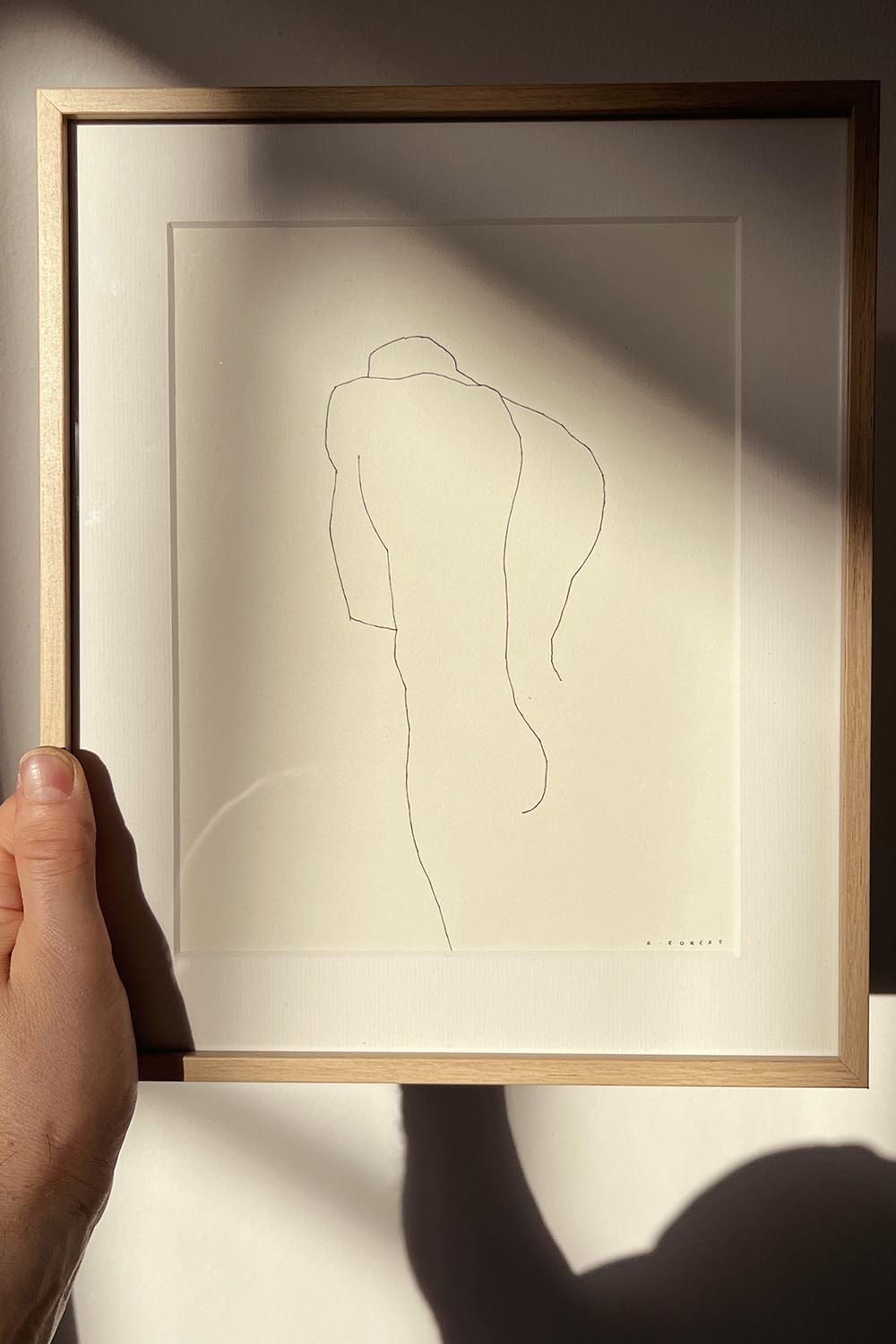
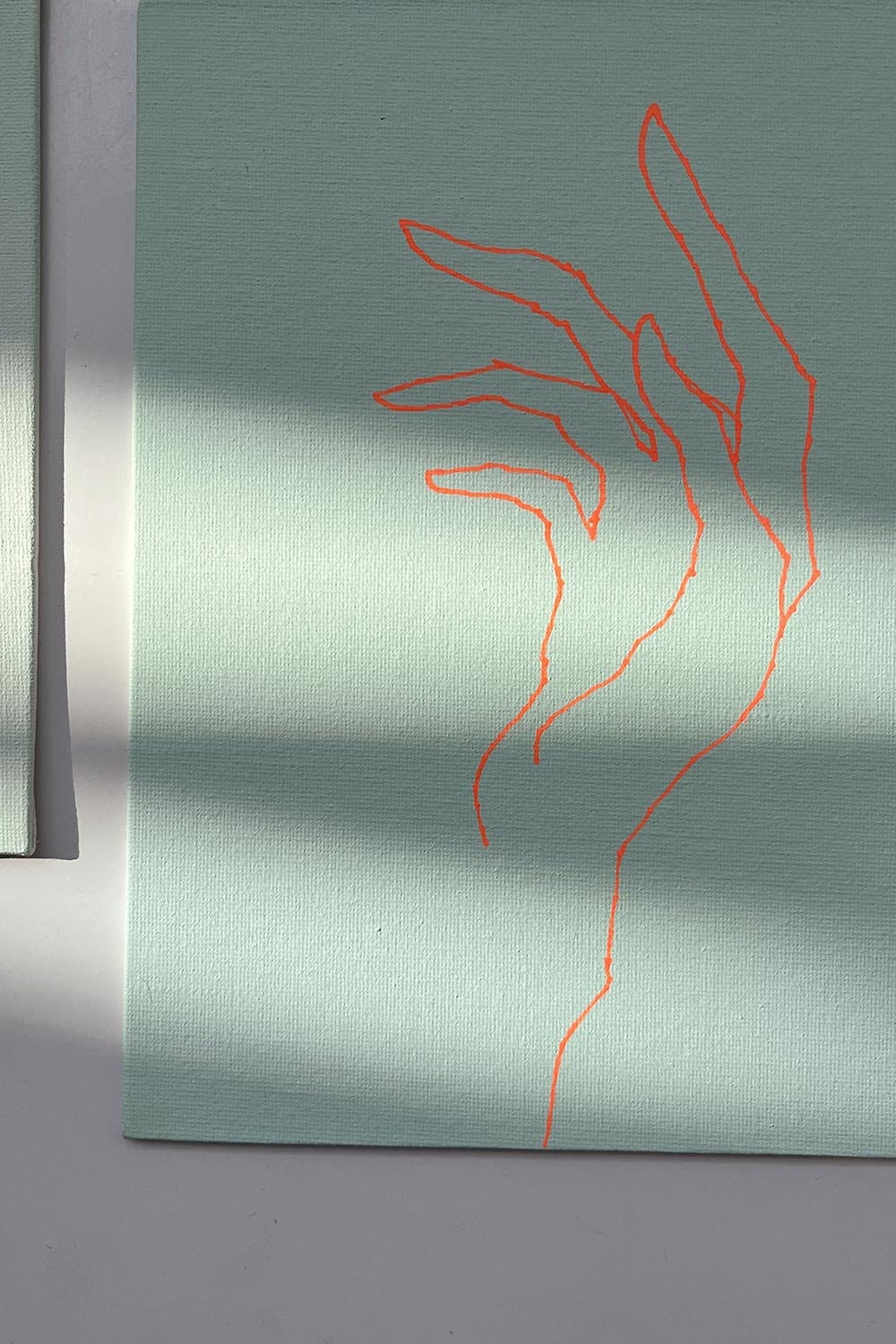
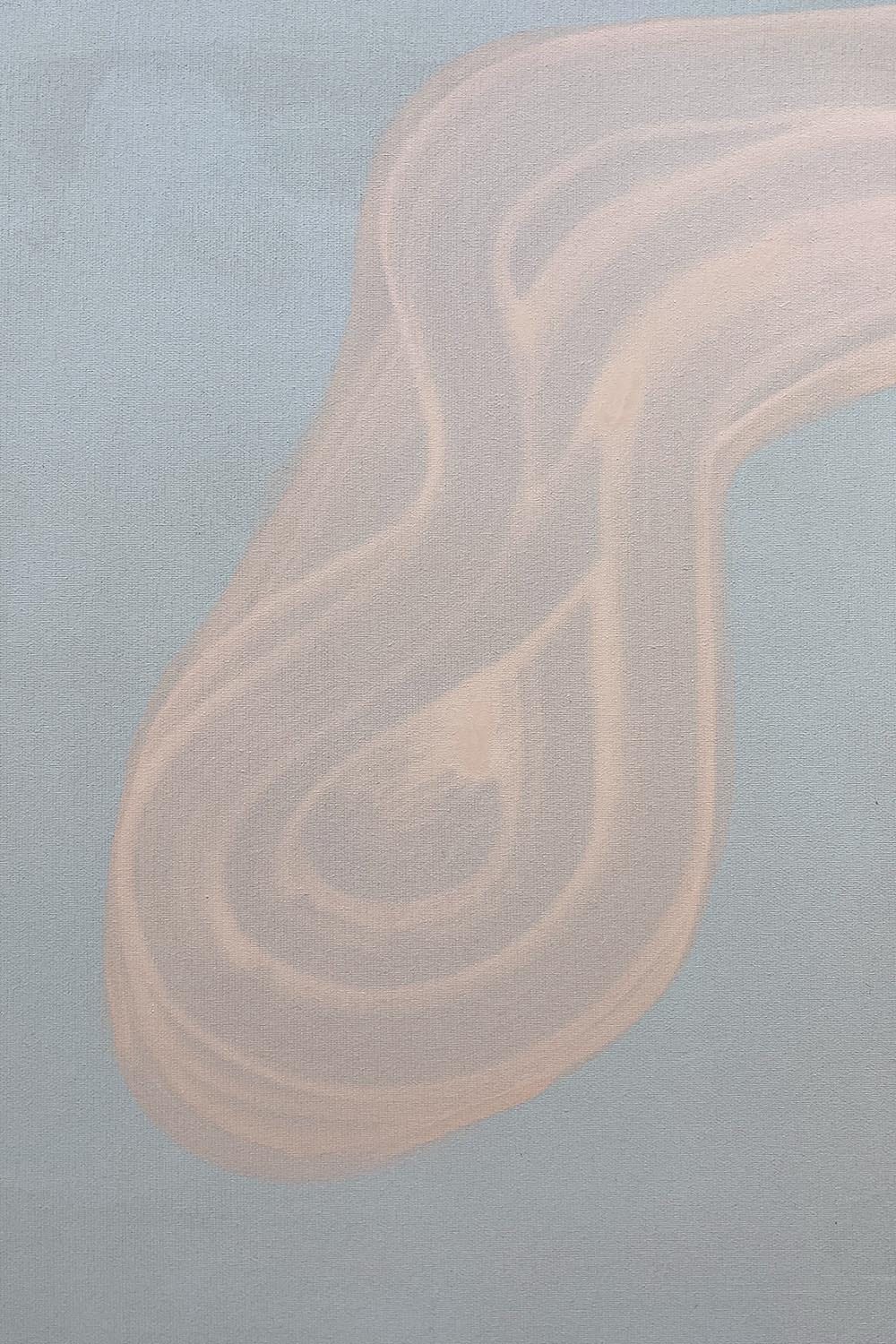
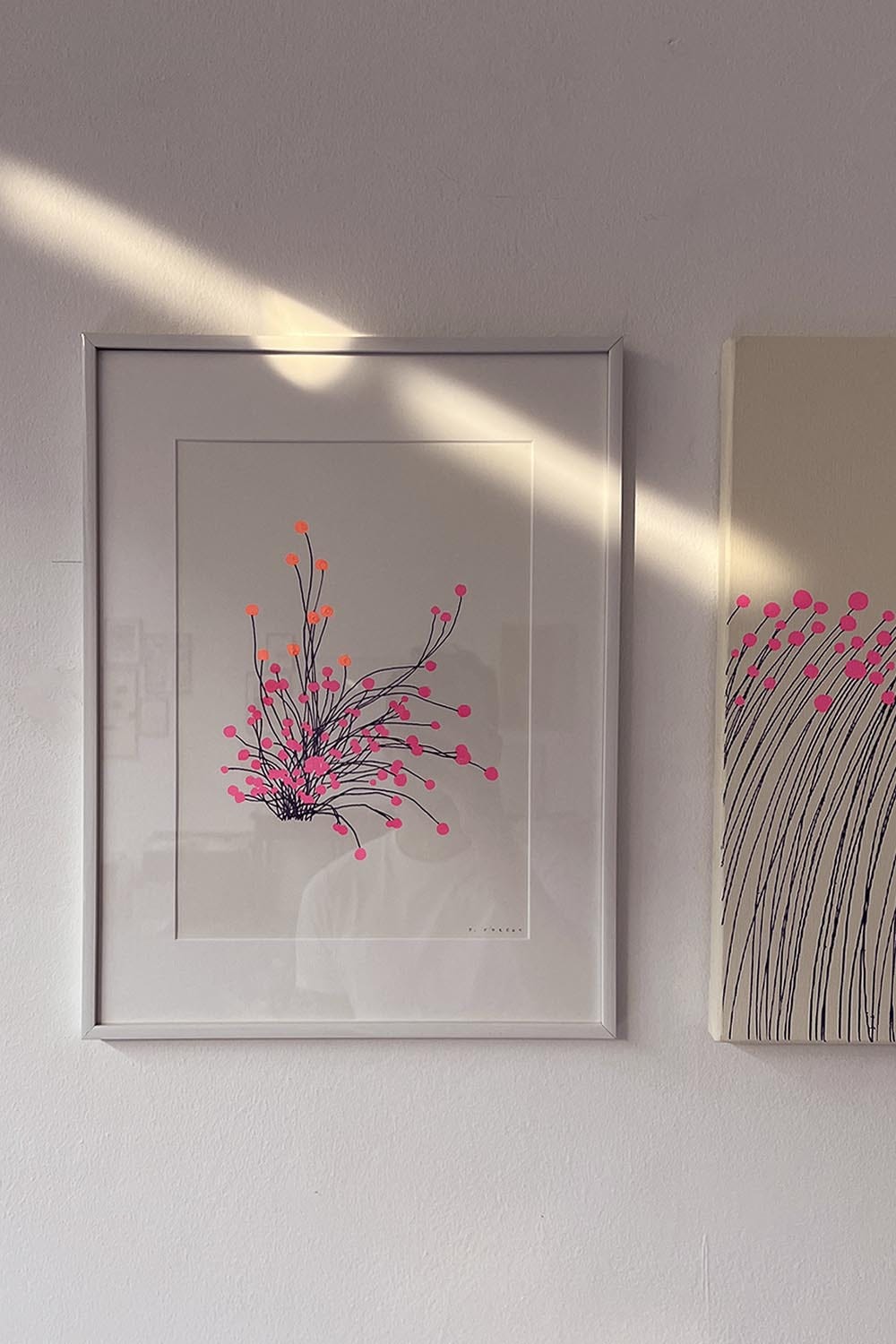
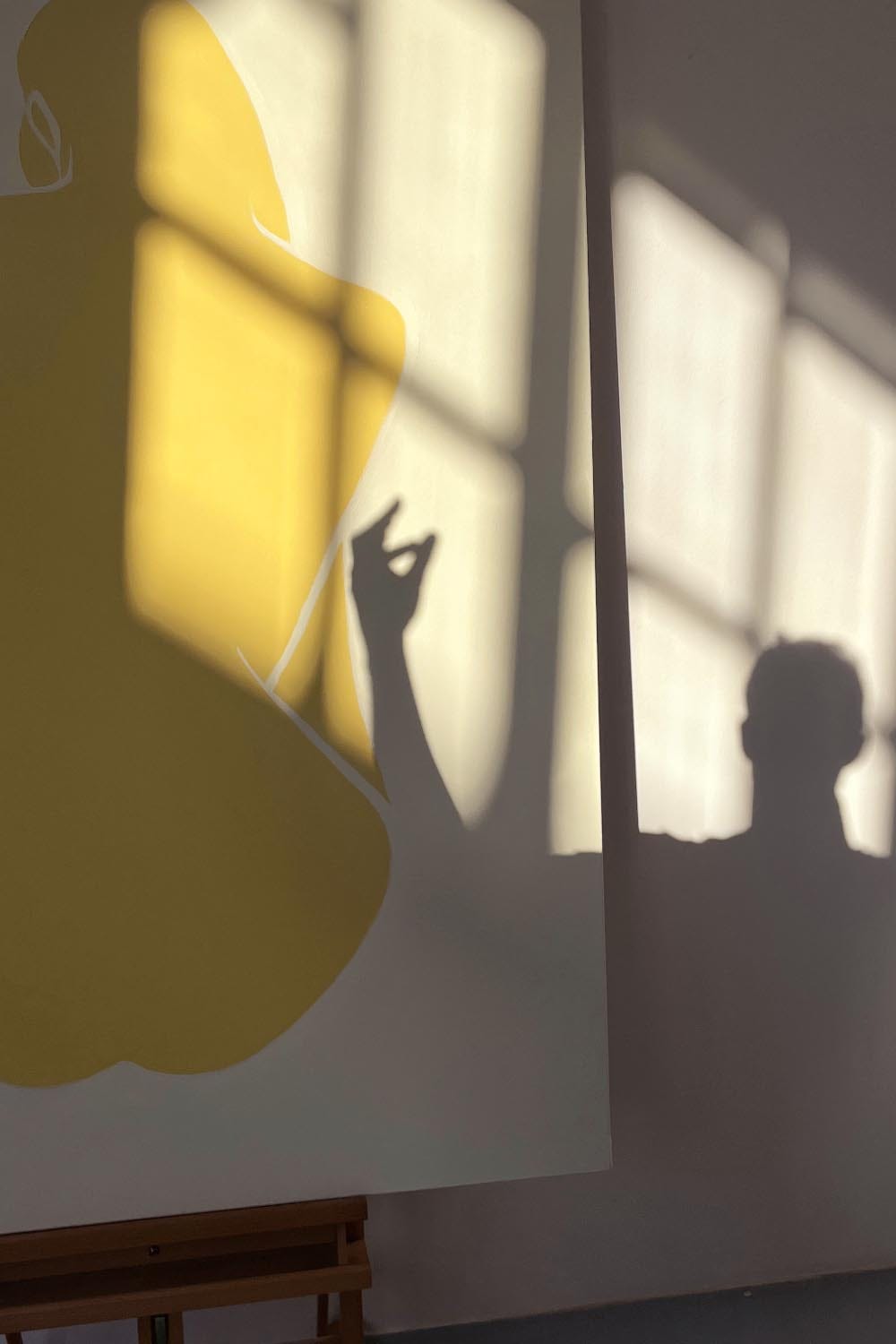
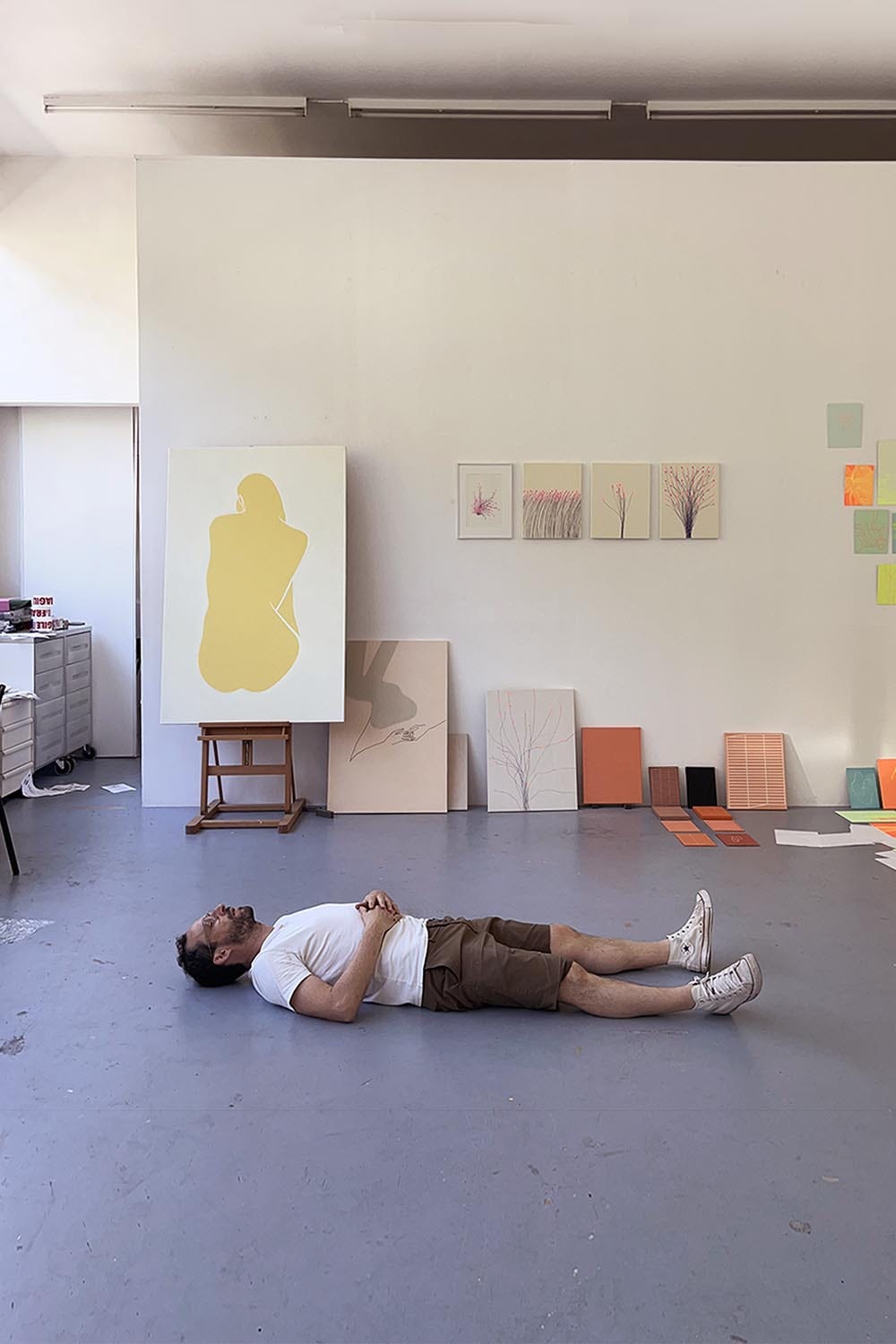
After a month of intense production, nearly a hundred drawings and paintings were completed. I am exhausted and happy. But I am curious to see how the hanging of the works will go and how they will interact with the spaces of the Contemporary Art Center. But that will be for a future post.
Thank you for your time and for reading.
Love