

Some of you have asked me several times about my inspirations, or more specifically about Klimt or Schiele. So it seemed fitting to share part of my story with Egon—well, that’s what we might call it.
I know I’ve said it before, but for those who didn’t know yet: I taught myself how to draw. I’ve always loved it, ever since I was a little kid—I just never stopped. I’d watch cartoons on TV and read a lot of comics (by the way, I have several projects in the works, but I need to improve the scripts). I grew up in Annecy, in the French Alps, far from Paris, its galleries, and museums. But honestly, I think that distance helped me. I was far from the canons of art and its world.
It was my mother who, seeing that I only drew characters, went to an art supply store and bought me two books to learn how to draw the human body. I still recommend them. In fact, I often look for them when I’m in that kind of store. Anyway, I almost knew the comic book panels and the fashion magazine pages that artists created by heart. But then, a new window into art opened up for me…
I must have been 16 when a small discount bookstore opened in the city center. I don’t remember its name, but I remember the shock I felt when I walked in. There was a whole new universe inside—architecture, graphic design, art, fashion. It was as if everything that had influenced me or that I loved to follow had been organized, gathered, and laid out before me. I wanted to take every single book. Plus, they were really affordable. I’ll never thank Taschen enough for that and for everything they’ve managed to pass on to my generation and so many others through their books! Among all those books, three stood out—the first three art books I ever bought for myself, three books I hadn’t even thought to look for. Three artists I didn’t know who deeply moved me and still do to this day, the day I, so to speak, “met” them: Gustav Klimt, Alfons Mucha, and Egon Schiele.
I didn’t understand what I was seeing or what was happening inside me. It truly was a shock. I know it might sound funny, and it makes me smile now when I think back on it. I was fascinated. Pure and simple. Mucha for his interplay of nature and graphic design, Klimt for his pictorial romanticism, and Schiele for his raw sensitivity, laid bare on paper and canvas. To be honest, I never read the texts in those books. All that mattered were the pages I turned and fixed in my retina. I never tried to copy them. It went far beyond that. At the time, I was deeply involved in graffiti, and skateboarding and snowboarding filled my thoughts. I wasn’t trying to become an artist. The joy of drawing was stronger, but it always remained separate from my scientific and technical studies. No, these artists were like a mantra, pure energy. They embodied what art means to me.
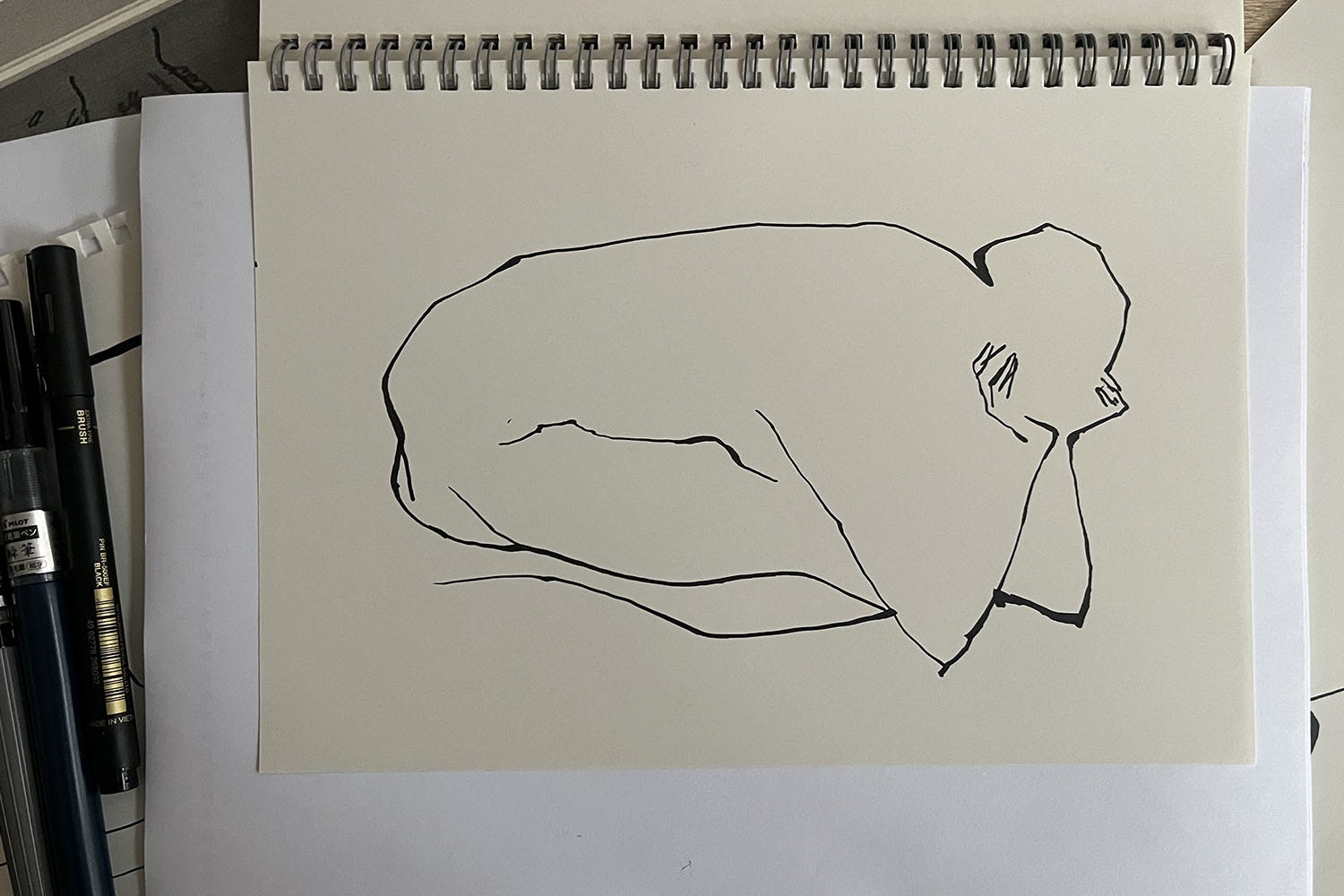
In 2018, the Louis Vuitton Foundation hosted the first monographic exhibition of Schiele in Paris in twenty-five years. I was lucky enough to see it. Or rather, to experience it. Or to relive it. During lockdown, I had the urge to turn it into a project, or at least an experience to share. This week, while tidying up my studio and some photos, I came across my notebooks and a few sketches I made during my visit to the exhibition. I immediately felt the urge to draw again, as if I were still inside Frank Gehry’s building or had just stepped out. So here are some images and videos for you. For a change, I’ve opted for real-time videos.
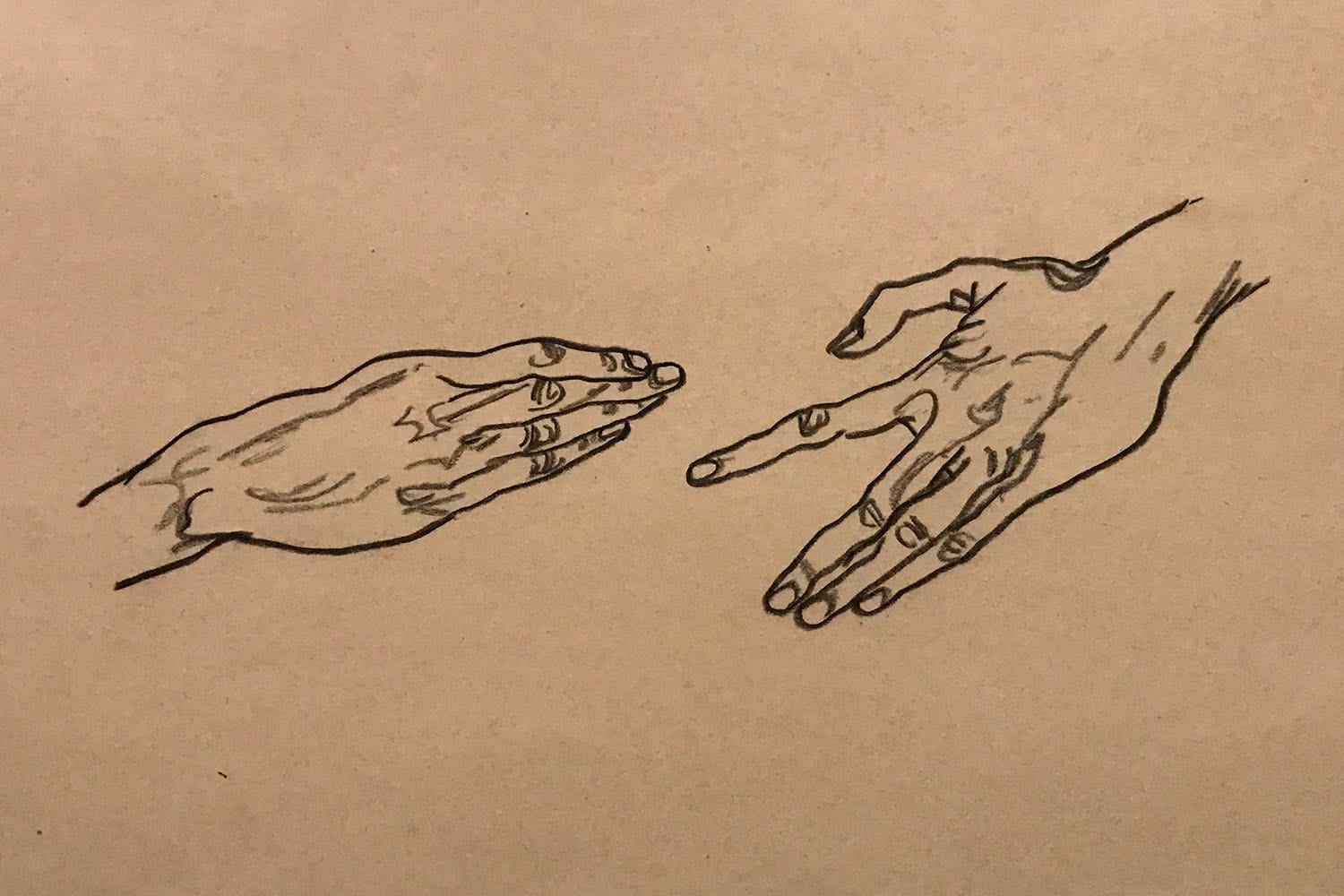
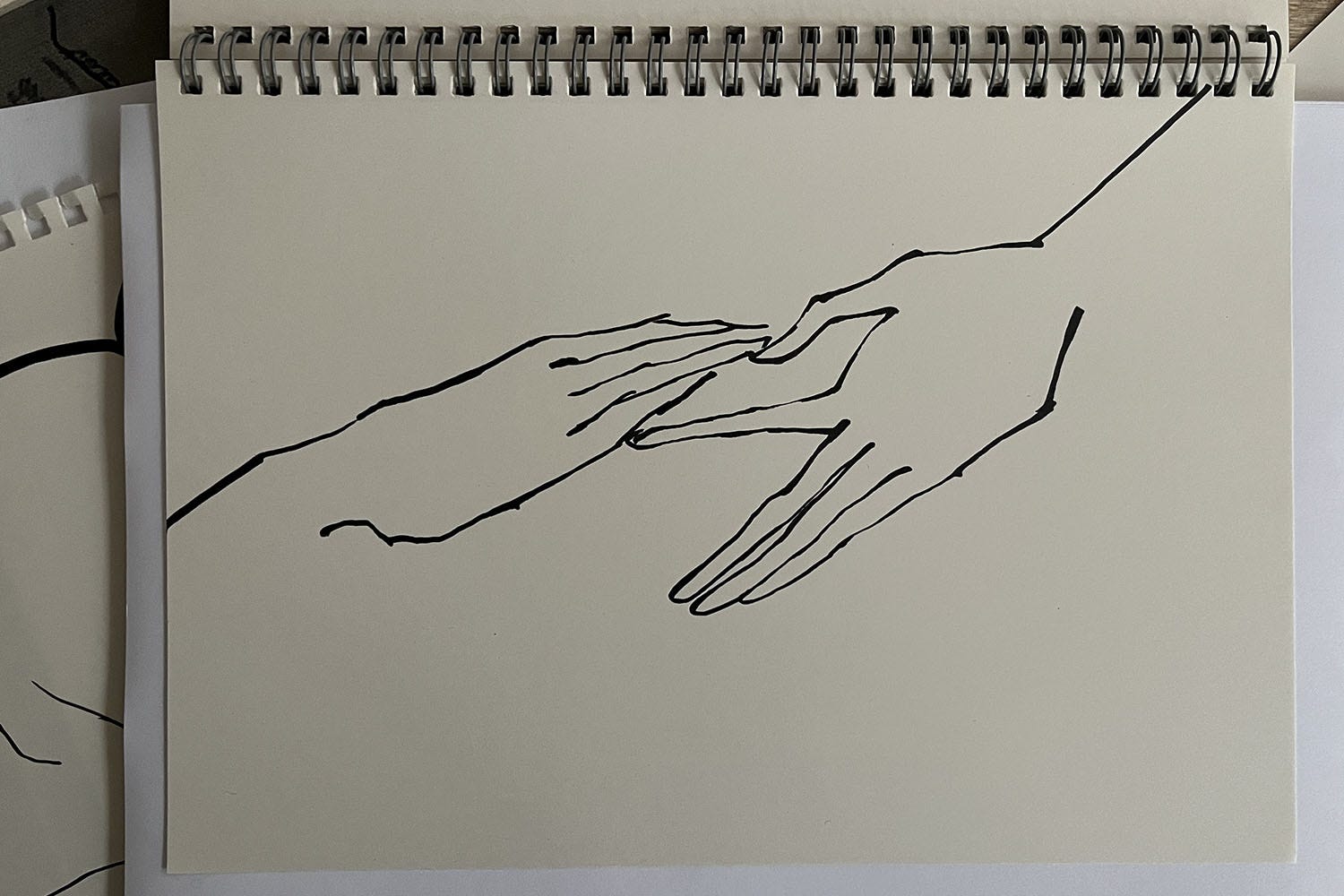
These are mostly free interpretations done in a simple sketchbook. However, I tried a brush pen that was gifted to me when I was in Japan last month, and I can tell you it’s quite exceptional: the Sailor Fude Nagomi Brush Pen, Extra Fine.
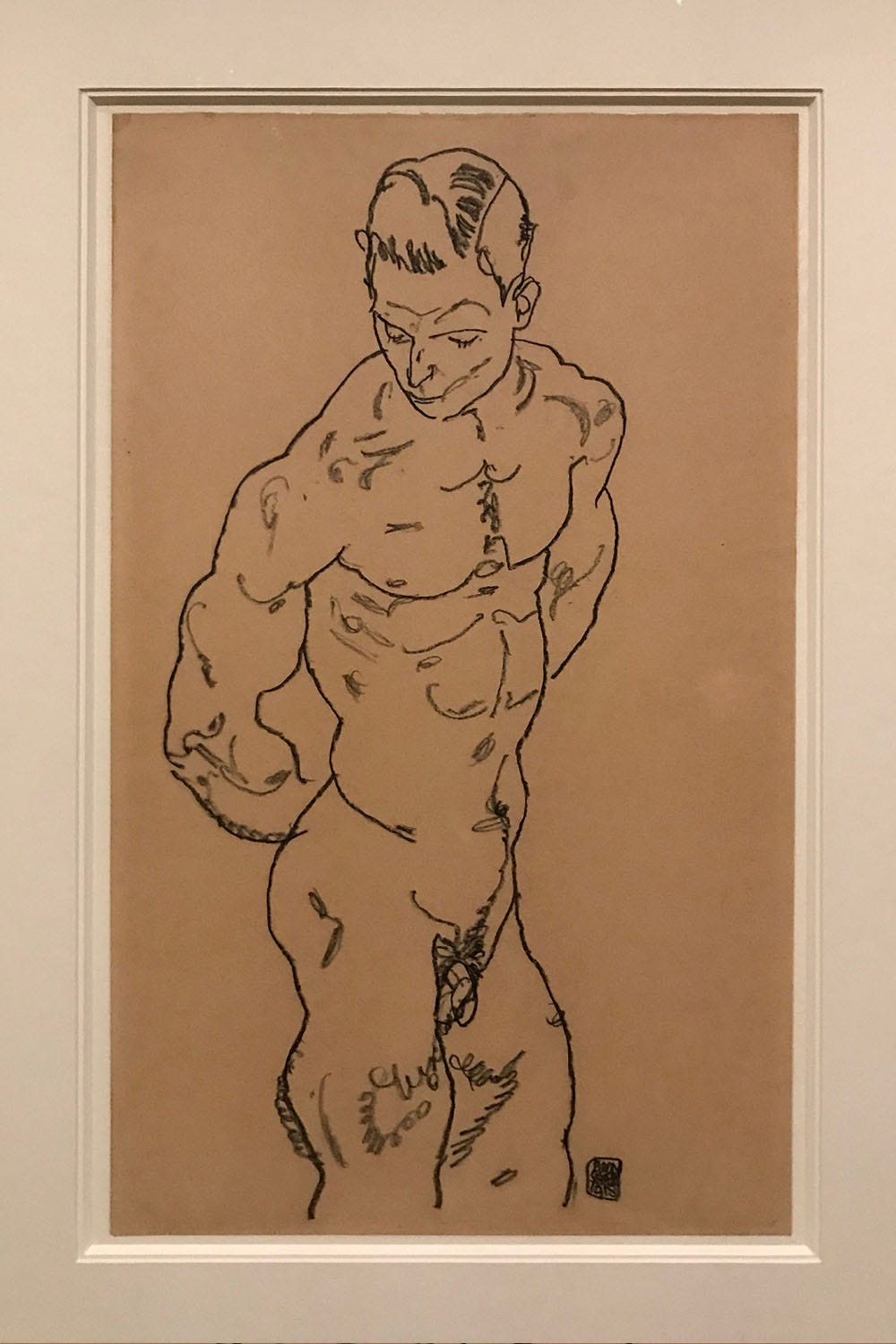
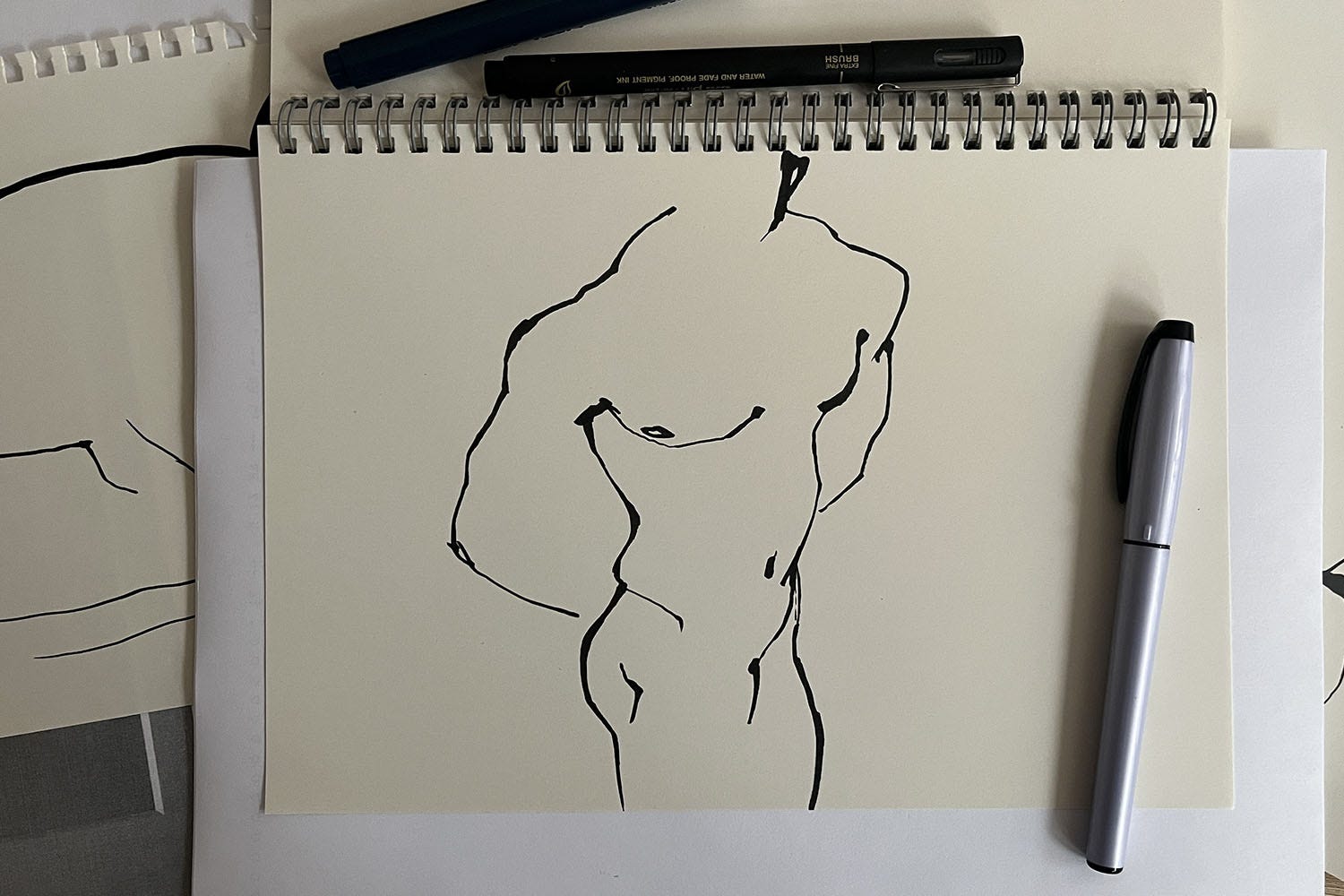
I haven’t kept track of the titles for these works, but if you know them, feel free to note them in the comments.
The retrospective featured major works, such as Self-Portrait with Chinese Lantern (1912) from the Leopold Museum (Vienna), Pregnant Woman and Death (Mother and Death) (1911) from the Národní galerie (Prague), Portrait of the Artist’s Wife (Edith Schiele), Holding Her Leg (1917) from the Morgan Library & Museum (New York), Standing Female Nude with Blue Cloth (1914) from the Germanisches Nationalmuseum, Nuremberg, Seated Male Nude, Seen from Behind (1910) from the Neue Galerie New York, and Self-Portrait (1912) from the National Gallery of Art, Washington.
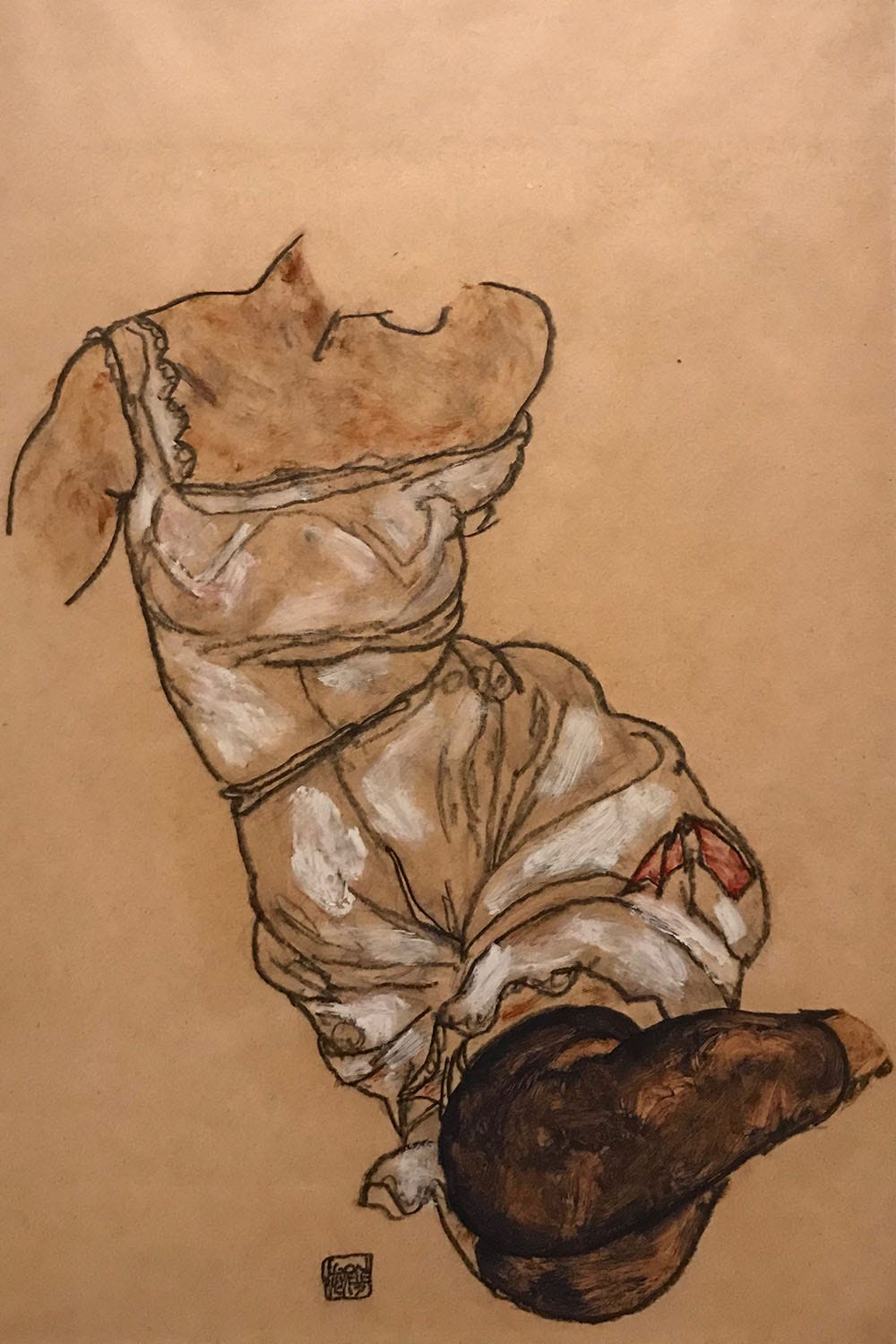
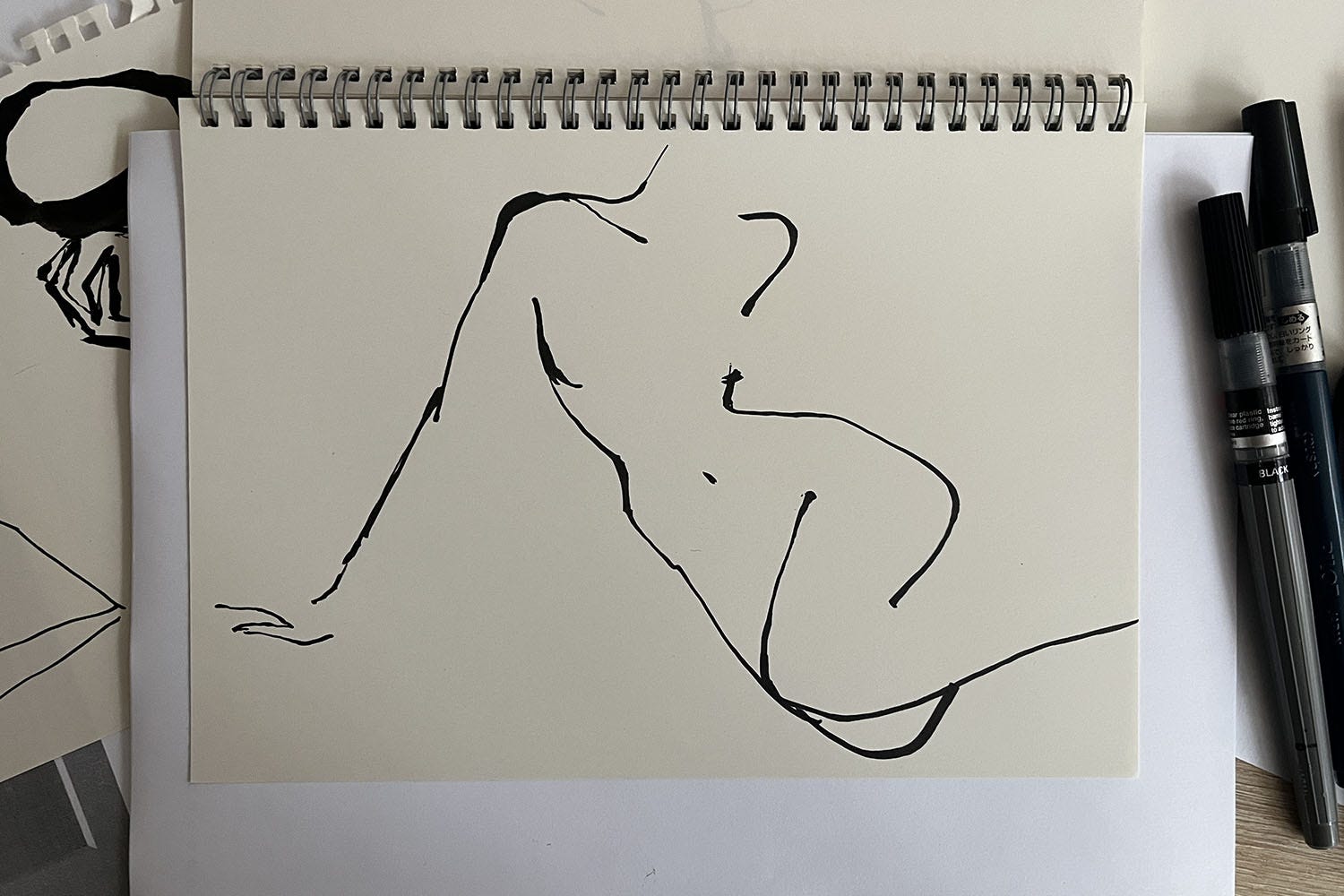
The exhibition brought together some 100 works—drawings, gouaches, and a few paintings—across over 600 square meters in the ground-floor galleries (Gallery 1). It was organized chronologically into four rooms, each exploring the concept of line and its evolution in Schiele’s work. Dieter Buchhart explains his approach: “Very few artists have engaged with line and drawing as virtuously and intensely as Schiele. […] By evolving from ornamental line to expressionist line—combined, modeled in three dimensions, fragmented, and amputated—he made possible a dissonant, divergent, and limit-experience of line as a sign of human existence.”
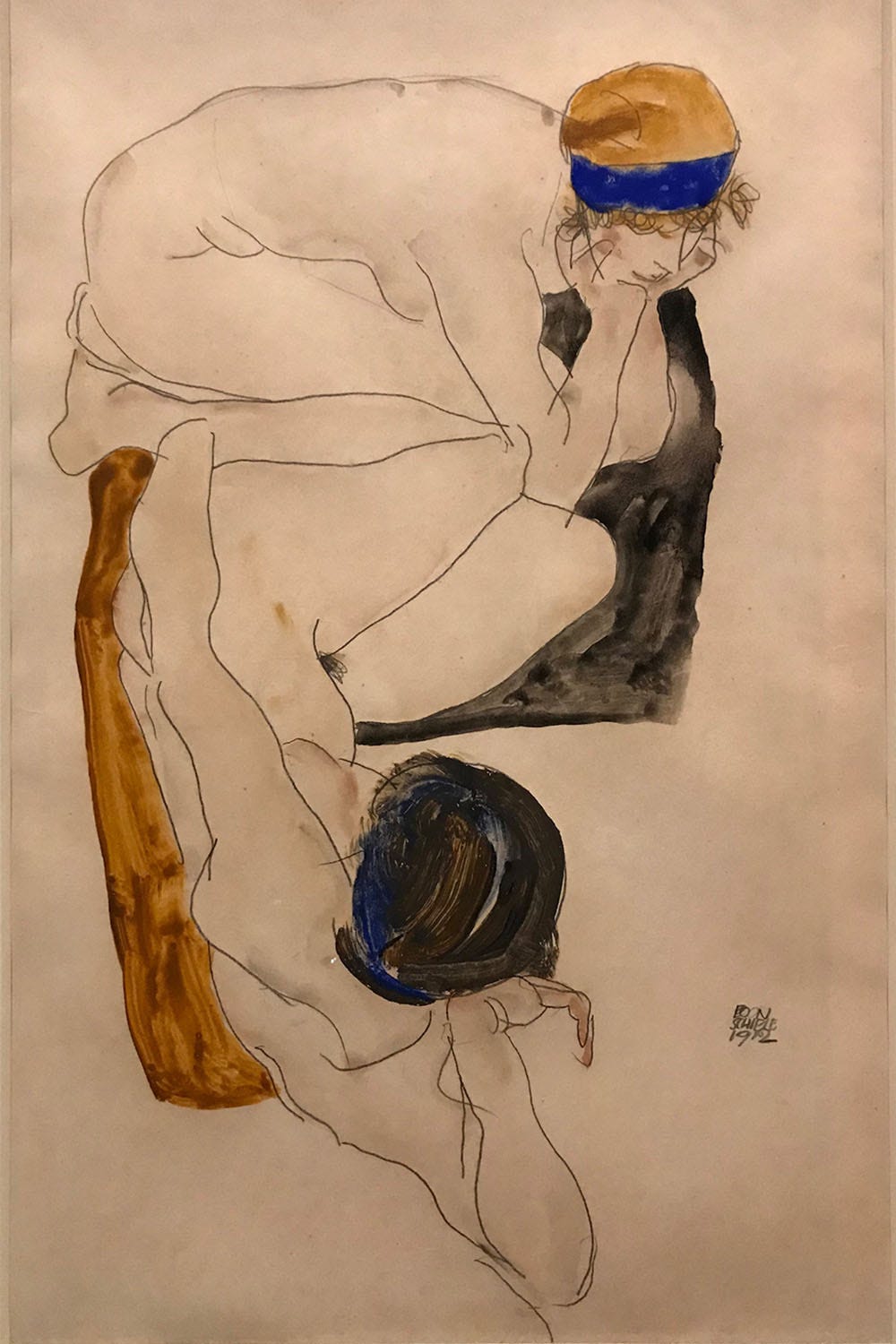
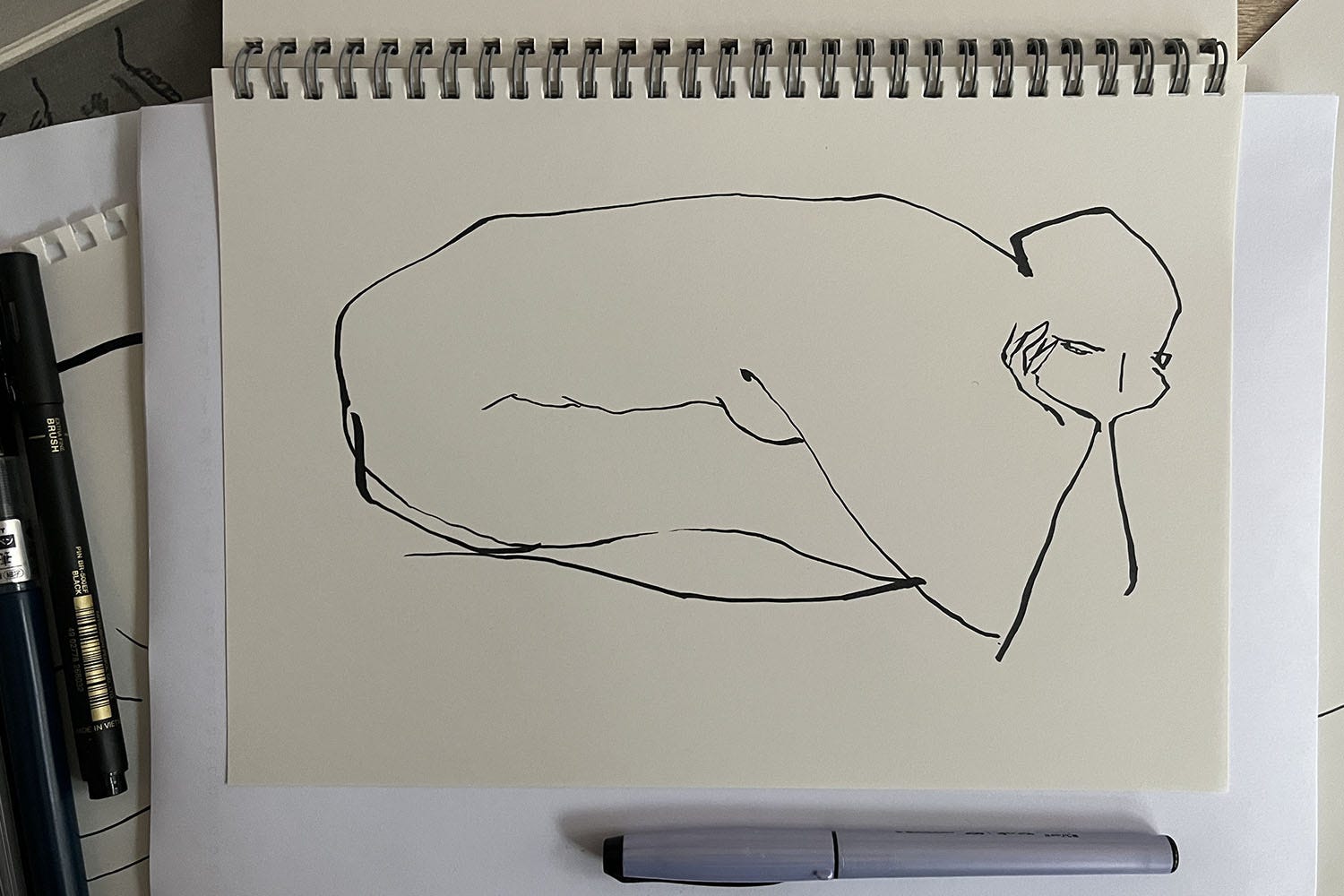
The four chapters of the exhibition were titled:
The Ornamental Line (1908–1909)
The Expressive Line (1910–1911)
The Combined Line (1912–1914)
The Amputated and Fragmented Line (1915–1918)
The Ornamental Line featured works inspired by Jugendstil, fluid and graceful, reflecting Schiele’s discovery of Gustav Klimt’s art, which played a major role in his development. The exhibition opened with Danaë, a large nude from 1909, clearly influenced by Klimt. The Expressive Line was inseparable from Schiele’s more expressionist works, with angular and contorted portraits and self-portraits, showcasing his experiments with line and color. The Combined Line, from the years leading up to the First World War, conveyed a premonitory anxiety about the war. This group of works coincided with or immediately followed Schiele’s brief imprisonment in 1912 in Neulengbach, after a series of accusations of “offenses against public morals.” This line emerged from the combination of traditional and innovative elements, marked by pronounced three-dimensionality and transparent hues. The Amputated and Fragmented Line reflected a deeper exploration of modeling and fragmentation through the omission of limbs in the depicted bodies. The placement of figures against empty backgrounds played a key role, as it always did in his work. This line was also characterized by a drier, more vivid use of color.
I think the exhibition catalog might still be available. At the very least, the book I bought over thirty years ago is still published by Taschen—they’ve just changed the cover.
Thank you for taking the time to read this. Have a great weekend.
Love,